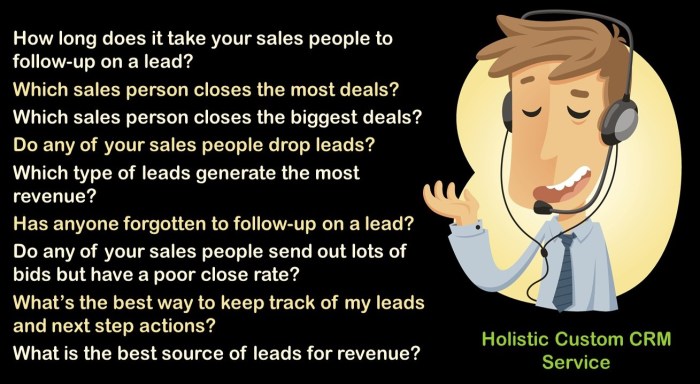
Building Custom CRM Solutions with Server Hosting is crucial for businesses needing tailored solutions. This guide dives deep into designing, developing, and hosting custom CRMs, from initial setup to future scalability. We’ll explore the benefits of a custom solution, comparing it to off-the-shelf options, and outlining the key considerations for a successful implementation.
Choosing the right server hosting (cloud, on-premises, or hybrid) is vital. Understanding server specifications, security measures, and ongoing maintenance is critical for a robust and reliable system. We’ll also cover cost estimations and ROI analysis, helping you justify the investment in a custom CRM.
Introduction to Custom CRM Solutions
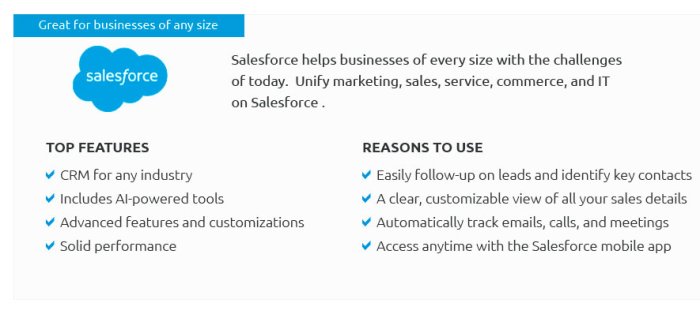
Tired of off-the-shelf CRMs that feel like a one-size-fits-all solution? A custom CRM is tailor-made to perfectly fit your business’s unique needs, processes, and workflows. Instead of forcing your business into a pre-built mold, a custom CRM lets you build the ideal platform for your team to thrive. This isn’t about just adding a few features; it’s about creating a system that fundamentally improves how your team interacts with customers and drives revenue growth.Custom CRM solutions offer significant advantages over generic, off-the-shelf options.
They’re not just about extra features; they’re about eliminating friction, optimizing workflows, and ultimately, boosting your bottom line. By understanding the key considerations and types of custom CRMs available, you can make an informed decision that aligns with your specific business requirements.
Defining a Custom CRM Solution
A custom CRM solution is a customer relationship management system designed and built specifically for a particular business. Unlike pre-built CRM software, a custom CRM is not a generic template. It’s meticulously crafted to accommodate the unique processes, data structures, and functionalities of the specific company it serves. This tailored approach results in a CRM that perfectly reflects a business’s individual needs.
Benefits of Custom CRM Solutions
Custom CRMs offer significant advantages over off-the-shelf solutions. They provide a more tailored approach, addressing specific business needs and maximizing efficiency. This leads to improved data accuracy, increased productivity, and reduced operational costs in the long run. A well-designed custom CRM streamlines processes, eliminating redundancies and bottlenecks.
Key Considerations When Building a Custom CRM
Several factors must be carefully considered before embarking on building a custom CRM. These considerations are critical to ensuring the solution meets specific business needs and aligns with future growth plans. Firstly, a thorough understanding of your company’s unique processes and data requirements is essential. Secondly, consider your team’s skills and technical expertise; it’s crucial to choose a development team that understands your needs and can execute them effectively.
Lastly, a clear budget and realistic timeline are necessary to ensure the project stays on track.
Different Types of Custom CRM Solutions
Understanding the different types of custom CRM solutions can help you choose the right approach for your business. These solutions are designed to cater to various needs and complexities.
| Type of Custom CRM | Description | Suitable for |
|---|---|---|
| Sales-focused CRM | Designed primarily for managing sales pipelines, tracking leads, and automating sales processes. | Businesses with a strong sales focus, prioritizing lead management and conversion. |
| Marketing-focused CRM | Emphasizes marketing automation, campaign management, and customer segmentation. | Companies prioritizing marketing automation and customer segmentation. |
| Service-focused CRM | Concentrates on customer service management, issue tracking, and resolution. | Businesses that prioritize customer support and issue resolution. |
| Hybrid CRM | Combines features from sales, marketing, and service CRMs to offer a comprehensive solution. | Businesses requiring a holistic view of customer interactions across multiple departments. |
Each type of custom CRM solution is tailored to specific business functions, enabling efficient management of various aspects of customer relationships. Careful consideration of these different approaches is essential to ensuring the solution aligns with your business’s overall strategy and objectives.
Server Hosting for Custom CRM Solutions
Choosing the right server hosting for your custom CRM is crucial for performance, scalability, and security. A poorly configured or underpowered server can cripple your CRM, leading to slow response times, data loss, and ultimately, lost revenue. Understanding the various options available and their implications is key to building a robust and reliable system.Server hosting options range from the flexibility of cloud solutions to the more traditional on-premises approach, each with its own set of advantages and disadvantages.
Selecting the best fit depends on your specific needs, budget, and technical expertise. This section will delve into the details of each option, comparing their costs and requirements.
Server Hosting Options
Different hosting options cater to diverse business needs and technical capabilities. Choosing the right one hinges on understanding the trade-offs each entails.
- Cloud Hosting: Cloud-based solutions offer scalable and flexible infrastructure. Resources can be easily adjusted to meet fluctuating demands, making it ideal for startups and businesses experiencing rapid growth. This approach often involves pay-as-you-go pricing models, making it potentially cost-effective for organizations with unpredictable needs. Cloud providers typically handle server maintenance, security updates, and infrastructure upgrades, freeing up your team to focus on core CRM functionalities.
- On-Premises Hosting: On-premises hosting involves installing and maintaining servers in your own physical data center. This approach provides complete control over the infrastructure, security, and data. However, it requires significant upfront investment in hardware, software, and ongoing maintenance costs, including IT staff dedicated to managing the servers. This option is best suited for businesses with substantial IT resources and a high degree of control over their infrastructure.
It’s a good choice for businesses with sensitive data that need complete security and control.
- Hybrid Hosting: Hybrid hosting combines elements of both cloud and on-premises solutions. This approach allows businesses to leverage the scalability and flexibility of the cloud for certain applications while retaining control over critical data and applications through on-premises servers. It’s a pragmatic option for organizations that need a balance between control and scalability, such as those with regulatory compliance needs or legacy systems that cannot be easily migrated to the cloud.
Comparing Hosting Options for Custom CRMs
The optimal choice depends on a careful analysis of the advantages and disadvantages of each model.
| Feature | Cloud Hosting | On-Premises Hosting | Hybrid Hosting |
|---|---|---|---|
| Cost | Generally lower initial cost, variable recurring costs | High initial cost, predictable recurring costs | Combination of both, cost depends on the mix |
| Scalability | Highly scalable, easily adjust resources | Less scalable, requires significant investment for upgrades | Scalable, but depends on the cloud portion’s configuration |
| Control | Limited control over infrastructure | Complete control over infrastructure | Balanced control, some control over cloud portion |
| Security | Relies on cloud provider’s security measures | Directly managed security, greater control | Combination of cloud and on-premises security |
| Maintenance | Cloud provider handles maintenance | Requires internal IT staff for maintenance | Combination of cloud and internal maintenance |
| Data Location | Data is often spread across multiple locations | Data is in a single location | Data can be distributed across multiple locations |
Essential Server Specifications for Robust Custom CRMs
For a performant and scalable custom CRM, the server needs to be equipped with appropriate specifications.
- Processor (CPU): A multi-core processor with sufficient processing power is vital for handling the complex calculations and data processing required by a CRM. Modern CRMs handle massive datasets and require high-performance processors.
- Memory (RAM): Ample RAM is essential to accommodate the application, user sessions, and large datasets. The RAM should be able to handle simultaneous user access and data storage.
- Storage (HDD/SSD): The storage needs to accommodate the database, application files, and user data. Solid-state drives (SSDs) are generally preferred for faster access speeds.
- Network Connectivity: High-speed network connectivity is crucial for efficient data transfer and responsiveness. This includes factors like bandwidth and latency.
Development and Implementation
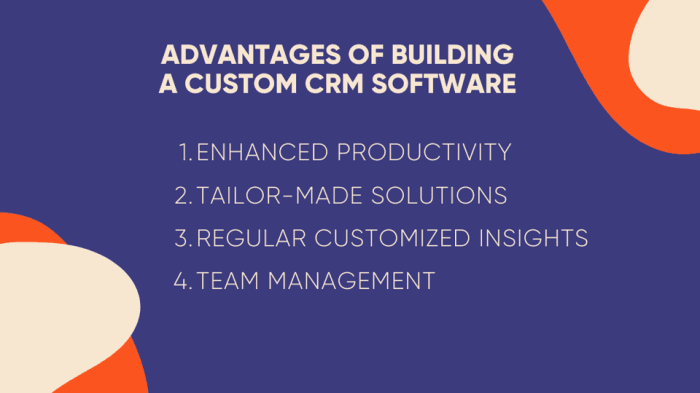
Building a custom CRM is a significant undertaking, requiring meticulous planning and execution. It’s not just about coding; it’s about understanding your business needs deeply and translating them into a functional, scalable system. This phase involves meticulous design, careful integration with existing systems, and proactive problem-solving during implementation. The success of your CRM hinges on a smooth development and implementation process.
Designing a Custom CRM
The design phase is crucial. It involves defining the specific features and functionalities required to meet your business objectives. A thorough understanding of your current processes and future goals is paramount. This includes identifying critical data points, defining user roles and access levels, and outlining the workflows and reporting needs. Detailed documentation is essential to ensure everyone involved is on the same page and to facilitate future maintenance and upgrades.
Thorough planning reduces errors and wasted resources during development. Consider using wireframes and mockups to visualize the user interface and user experience (UI/UX). This allows for early feedback and adjustments.
Development Process
Developing a custom CRM is a multi-stage process. It typically involves requirements gathering, design, coding, testing, and deployment. Each stage needs careful attention to detail. The choice of technology stack—programming languages, databases, and frameworks—significantly impacts development speed and scalability. Consider factors like scalability, maintainability, and future integrations when selecting the appropriate technologies.
Utilizing Agile methodologies can help manage changes and adapt to evolving business needs throughout the development process.
Integration with Existing Systems
Integrating a custom CRM with existing systems is a critical aspect of implementation. This often involves data migration, API development, and workflow adjustments. A well-planned integration strategy ensures a seamless transition. Mapping data fields between the new CRM and existing systems is crucial to avoid data loss or duplication. APIs allow the custom CRM to communicate and exchange data with other applications, providing a unified view of the customer journey.
A phased approach to integration, testing each integration step individually, minimizes risk and ensures smooth data transfer.
Common Implementation Challenges
Several challenges can arise during CRM implementation. Budget overruns, schedule delays, and resistance to change from users are common. Clear project timelines, realistic budget estimations, and proactive communication with stakeholders are vital for mitigating these risks. Training and support for users are essential for successful adoption and effective utilization of the new CRM. Continuous monitoring and evaluation are crucial to ensure the CRM meets evolving business needs and adapt to changing market conditions.
CRM Development Life Cycle
| Stage | Description |
|---|---|
| Requirements Gathering | Defining business needs, identifying data points, and outlining user roles. |
| Design | Creating a blueprint for the CRM, including wireframes, mockups, and data models. |
| Development | Building the CRM based on the design, utilizing chosen technologies. |
| Testing | Thorough testing to ensure functionality, data integrity, and user experience. |
| Deployment | Deploying the CRM to the production environment. |
| Implementation | Integrating the CRM with existing systems, training users, and monitoring performance. |
| Maintenance | Ongoing support, updates, and adjustments to ensure optimal performance and usability. |
Security and Maintenance
Building a custom CRM is a powerful move, but security and ongoing maintenance are critical. Ignoring these aspects can lead to significant problems, from data breaches to lost revenue. A robust security plan and a well-defined maintenance strategy are crucial for the long-term success of your custom CRM.Security and maintenance aren’t just nice-to-haves; they’re necessities. Think of your CRM as the heart of your business operations.
A compromised or poorly maintained system can cripple your entire workflow, costing you time, money, and potentially your reputation.
Essential Security Measures
Robust security measures are paramount for safeguarding sensitive customer data and maintaining the integrity of your custom CRM. Implementing these measures protects against unauthorized access, data breaches, and malicious attacks. This is not a one-time task; ongoing vigilance is key.
Building custom CRM solutions with server hosting is crucial for scaling. You need a rock-solid foundation, and that means understanding why CRM systems need robust server hosting support, like this article explains Why CRM Systems Need Robust Server Hosting Support. Ultimately, a strong hosting solution is the key to building a CRM that can handle your growing business needs and data demands.
Choosing the right hosting ensures your custom CRM is future-proof and reliable.
- Multi-Factor Authentication (MFA): Implementing MFA adds an extra layer of security by requiring multiple verification steps before granting access. This significantly reduces the risk of unauthorized logins, even if a password is compromised.
- Regular Security Audits: Conducting regular security audits helps identify vulnerabilities and weaknesses in your system. A proactive approach allows for timely patching and strengthening of security protocols, preventing potential breaches.
- Data Encryption: Encrypting data both in transit and at rest protects sensitive information from unauthorized access, even if a system is compromised. This is a crucial element of data security, especially in today’s digital landscape.
- Access Control: Implementing strict access control measures restricts access to sensitive data based on user roles and responsibilities. This granular control prevents unauthorized users from accessing confidential information, maintaining data privacy.
- Regular Vulnerability Assessments: Use tools and techniques to identify potential vulnerabilities. These assessments should be conducted regularly to address any weaknesses that may emerge over time, staying ahead of potential threats.
Best Practices for Ongoing Maintenance
Regular maintenance and updates are essential for keeping your custom CRM functioning optimally and securely. Keeping the system updated ensures it continues to meet current security standards and business needs.
- Automated Updates: Implement automated update systems for the CRM software, server operating system, and any associated applications. This ensures that the system is always running on the latest versions with improved security features.
- Regular Backups: Establish a robust backup and recovery plan. Regularly back up data to prevent data loss due to system failures, hardware malfunctions, or human error. This is an absolute necessity.
- Software Updates: Keep all software components, including CRM software and any third-party integrations, updated to the latest versions. This usually involves security patches and bug fixes, enhancing the system’s resilience.
- Monitoring System Logs: Regularly monitor system logs for any unusual activity or errors. This proactive approach allows for early detection of potential issues and timely resolution.
- Regular Testing: Implement regular testing procedures to verify the system’s functionality and identify any performance bottlenecks. This approach helps to maintain the efficiency of your custom CRM.
Data Integrity and Backups
Data integrity is crucial for a CRM. Maintaining accurate and reliable data is essential for informed decision-making. Robust backups ensure data is recoverable in case of a system failure.
- Data Validation: Implement data validation rules to ensure data accuracy and consistency within your CRM. This ensures the reliability of the data collected and used by the system.
- Regular Data Verification: Periodically review and verify data to identify and correct any discrepancies. This step maintains data integrity and ensures accurate reporting.
- Redundant Backups: Implement multiple backup strategies and store backups in different locations to prevent data loss from any single point of failure. Data redundancy is critical.
- Automated Backup Procedures: Use automated backup procedures to schedule regular backups, ensuring data is always protected. This automated process minimizes the risk of data loss.
Handling Security Incidents
Having a plan for handling security incidents is vital. This plan should Artikel procedures to mitigate the impact of a data breach or other security incident.
- Incident Response Plan: Develop and implement a comprehensive incident response plan that Artikels procedures for handling data breaches and other security incidents. This plan is a critical component of any CRM’s security strategy.
- Notification Procedures: Establish clear notification procedures for affected users and regulatory bodies in the event of a data breach. Following these procedures minimizes damage and loss of reputation.
- Data Breach Recovery Plan: Create a data breach recovery plan to guide the steps needed to restore data and systems after a breach. This plan will be a crucial part of recovery.
Scalability and Future Considerations
Building a custom CRM isn’t a one-and-done project. It’s a living entity that needs to adapt to your business’s growth and evolving needs. Failing to plan for scalability from the start can lead to major headaches and costly rework later. Thinking ahead about how your CRM will handle future growth and changing requirements is crucial for long-term success.Designing a CRM with scalability in mind means anticipating future needs and building flexibility into the core architecture.
This isn’t just about adding more servers; it’s about creating a system that can accommodate more users, more data, and more complex functionalities without breaking down. A well-structured custom CRM solution can handle the ever-increasing demands of your business, ensuring that your data remains organized and easily accessible.
Designing for Future Growth
A custom CRM should be designed with extensibility in mind. This means using modular designs and decoupled components, making it easier to add new features without disrupting existing ones. For instance, a well-structured API allows for seamless integration with other applications and tools as your business expands. This ensures that your CRM remains a central hub for all your business data, not an isolated island.
This flexibility will enable you to adapt to changing market demands and customer expectations without having to rewrite the entire system.
Planning for Changing User Requirements
Anticipating changes in user needs is paramount. Consider how user roles and permissions might evolve. For example, as your team grows, you might need to introduce new roles with specific access levels. The CRM should be able to accommodate these changes without needing significant code alterations. Using a flexible database structure and a robust user management system can help achieve this.
You should use a scalable database system that can handle growing data volumes without performance issues.
Adding New Features and Functionalities
Adding new features should be a straightforward process. Utilizing an agile development approach allows for iterative enhancements and minimizes the risk of introducing bugs. A well-defined API for the custom CRM facilitates the addition of new features. This approach reduces the impact of future changes and ensures that your CRM remains relevant to the ever-changing landscape of your business.
Regular code reviews and testing are crucial to ensure the quality and stability of these new additions.
Strategies for Future CRM Upgrades and Expansions
| Strategy | Description | Pros | Cons |
|---|---|---|---|
| Modular Design | Breaking down the CRM into independent modules. | Allows for easier feature additions, modifications, and maintenance. | Requires careful planning and coordination to avoid inconsistencies. |
| Scalable Database | Choosing a database system that can handle increasing data volumes. | Ensures performance even with growing data. | May involve initial investment in a more robust database. |
| API-Driven Architecture | Building the CRM with a well-defined API for external integrations. | Facilitates integration with other systems. | Requires dedicated API development and maintenance. |
| Agile Development | Using iterative development cycles for adding features. | Allows for quick adjustments to changing requirements. | Requires disciplined project management and stakeholder communication. |
Case Studies and Real-World Examples
Custom CRM solutions aren’t just theoretical concepts; they’re powerful tools that drive real business results. Let’s look at some real-world examples of how companies have leveraged custom CRMs to achieve significant growth and efficiency. From streamlining sales processes to improving customer retention, these implementations demonstrate the transformative potential of tailored software.These case studies highlight the diverse ways custom CRMs can be applied across various industries.
We’ll explore the specific challenges faced, the innovative solutions implemented, and the tangible outcomes realized by businesses who invested in bespoke CRM solutions. This analysis will show you the potential ROI and the critical factors to consider when embarking on a custom CRM journey.
Successful Custom CRM Implementations, Building Custom CRM Solutions with Server Hosting
Custom CRM solutions offer a powerful approach to addressing specific business needs. By tailoring software to their unique workflows, companies can gain significant advantages. Several industries have successfully implemented custom CRMs to streamline operations and achieve quantifiable results.
- A retail company, using a custom CRM, integrated their point-of-sale system with their customer relationship management database. This allowed for real-time updates of customer interactions, purchases, and preferences. The result? Improved customer segmentation, personalized marketing campaigns, and a 15% increase in customer retention within the first year.
- A software company developed a custom CRM that tracked software development progress, customer feedback, and support tickets. This allowed them to anticipate future needs and improve project management. The consequence? Reduced development time by 20%, enhanced customer satisfaction, and improved overall efficiency.
- A healthcare provider implemented a custom CRM system for managing patient records, scheduling appointments, and tracking treatment progress. This improved patient care, streamlined administrative tasks, and enabled data-driven decision-making. The consequence? Reduced administrative costs by 10%, improved patient satisfaction scores, and enhanced healthcare outcomes.
Challenges and Successes in Different Industries
Implementing a custom CRM is not without its hurdles. Careful planning and execution are crucial for a successful outcome. However, the benefits can significantly outweigh the challenges for businesses that understand the process.
- Retail: Challenges often include integrating legacy systems and managing large volumes of data. Successful implementations focus on streamlined order processing, inventory management, and personalized customer experiences. This translates to higher conversion rates and increased sales.
- Healthcare: Integrating patient data securely and complying with HIPAA regulations are critical considerations. Successful implementations prioritize patient privacy, data security, and efficient workflow management, leading to enhanced patient care and reduced administrative overhead.
- Software Development: Complex project management and adapting to evolving client needs are common challenges. Successful implementations emphasize robust project tracking, clear communication channels, and agile development methodologies, ultimately leading to faster product delivery and improved customer satisfaction.
Impact on Business Outcomes
Custom CRMs can drive significant improvements in key business metrics. The impact varies depending on the specific needs and implementation strategies.
- Improved customer satisfaction scores by 20% through personalized communication and tailored support.
- Increased sales conversions by 15% through improved lead nurturing and sales process optimization.
- Reduced operational costs by 10% by automating tasks and improving workflow efficiency.
Summary Table of Custom CRM Solutions
This table summarizes key features and functionalities of different custom CRM solutions used by various businesses.
Building custom CRM solutions with server hosting can be complex, but it’s often a necessary step for businesses needing highly specific features. However, consider the advantages of cloud hosting for CRM solutions and data, like scalability and accessibility. The Benefits of Cloud Hosting for CRM Solutions and Data highlight the ease of management and reduced overhead.
Ultimately, carefully weighing these factors is crucial when deciding on the best approach for your custom CRM solution.
| Company | Industry | Key Features | Impact |
|---|---|---|---|
| Retail Company A | Retail | Real-time order tracking, inventory management, personalized customer experiences | 15% increase in customer retention |
| Software Company B | Software Development | Robust project tracking, agile development, efficient customer support | 20% reduction in development time |
| Healthcare Provider C | Healthcare | Secure patient data management, appointment scheduling, treatment progress tracking | 10% reduction in administrative costs |
Cost and ROI Analysis
So, you’re thinking about a custom CRM? Fantastic! But before you dive headfirst, let’s talk cold, hard cash. Understanding the cost and potential return on investment (ROI) is crucial. A custom CRM can be a game-changer, but it needs a strong justification. It’s not just about features; it’s about how those features translate into tangible results for your business.
Estimating Total Custom CRM Costs
Building a custom CRM isn’t a one-size-fits-all price tag. It depends on a multitude of factors. Think about the complexity of the system, the features you need, the development team’s expertise, and the chosen hosting model. There’s no magic formula, but here’s a general breakdown of cost components:
- Development Costs: This is the lion’s share, encompassing the actual coding, design, and testing. The size and scope of your CRM directly influence the development time and hence the cost. Expect a significant amount here.
- Design and User Interface (UI) Costs: A visually appealing and user-friendly CRM is key for adoption. The more complex the design and integration of your current workflows, the more this will cost.
- Testing and Quality Assurance (QA) Costs: Rigorous testing is essential to avoid costly errors down the line. This stage ensures the CRM functions as expected and is bug-free. It’s a critical step often overlooked.
- Server Hosting Costs: Cloud hosting options are becoming increasingly popular for scalability and ease of management. This cost depends on the chosen platform, storage capacity, and bandwidth requirements.
- Integration Costs: If you have existing systems, integrating the custom CRM might require additional development effort. This can be a substantial cost if you need to link to multiple legacy systems.
- Maintenance and Support Costs: Don’t forget ongoing maintenance, updates, and potential support needs after launch. Regular maintenance keeps your CRM running smoothly and avoids future issues.
Factors Influencing Custom CRM ROI
The ROI isn’t just about the initial cost; it’s about the long-term value. Key factors include:
- Increased Efficiency: A well-designed custom CRM streamlines workflows, reduces manual tasks, and frees up your team’s time. This translates into greater efficiency and higher productivity.
- Improved Data Management: Centralized data allows for better insights, faster decision-making, and a more comprehensive understanding of your customer base. This leads to improved sales and marketing strategies.
- Enhanced Customer Relationships: A custom CRM allows you to personalize interactions, track customer journeys, and improve customer satisfaction. Stronger customer relationships lead to higher retention rates.
- Reduced Operational Costs: Automation and streamlined processes can lead to reduced operational costs in the long run. Think about less wasted time and fewer errors.
- Scalability and Future Growth: A well-designed custom CRM is built with future growth in mind. This ensures your business can adapt and expand without significant disruptions or costly re-platforming.
Justifying the Cost to Stakeholders
Convincing stakeholders about the value of a custom CRM requires clear communication and measurable results. Use these strategies:
- Highlight Pain Points: Identify specific pain points your current CRM or lack of one creates. Quantify these pain points in terms of lost time, revenue, or customer dissatisfaction.
- Demonstrate ROI Potential: Use realistic projections of how a custom CRM can improve efficiency, reduce errors, and increase sales. Provide concrete examples, if possible.
- Present a Clear Timeline: Artikel a realistic timeline for development, implementation, and ROI achievement. Be transparent about potential challenges and how you’ll mitigate them.
- Offer a Comparative Analysis: Present a clear comparison between your current CRM and the projected benefits of a custom solution. This can be done through a table.
Potential ROI of a Custom CRM
| Metric | Existing System | Custom CRM | ROI |
|---|---|---|---|
| Sales Cycle Length (Days) | 30 | 20 | 33% Reduction |
| Customer Acquisition Cost (CAC) | $500 | $400 | 20% Reduction |
| Customer Retention Rate | 75% | 80% | 5% Increase |
| Average Order Value (AOV) | $100 | $120 | 20% Increase |
| Total Revenue Increase (Year 1) | $1,000,000 | $1,200,000 | 20% Increase |
Note: These are examples and will vary greatly based on your specific business.
Future Trends and Predictions: Building Custom CRM Solutions With Server Hosting
The custom CRM landscape is constantly evolving, driven by innovative technologies and shifting business needs. Staying ahead of the curve is crucial for building solutions that remain relevant and valuable. This section explores emerging trends and predictions for custom CRM solutions, from the technologies powering them to the design approaches that will shape the future.Predicting the future is tricky, but by analyzing current trends and emerging technologies, we can get a clearer picture of where custom CRM solutions are headed.
The key is adaptability – understanding these trends allows businesses to build solutions that are resilient and can easily adjust to evolving demands.
Emerging Technologies Impacting Custom CRM Solutions
Several emerging technologies are poised to revolutionize custom CRM solutions. Artificial intelligence (AI), machine learning (ML), and natural language processing (NLP) are already impacting how CRMs function, allowing for more intelligent automation, personalized experiences, and predictive insights. These technologies are enabling businesses to better understand customer behavior, anticipate needs, and streamline interactions. For example, AI-powered chatbots can handle routine customer inquiries, freeing up human agents to focus on more complex issues.
Personalized recommendations based on customer history are becoming increasingly common, and predictive analytics can help identify potential churn risks.
Innovative Approaches in Custom CRM Design and Development
The future of custom CRM design and development is moving towards more agile and iterative approaches. Focus on low-code/no-code platforms is accelerating development speed and lowering barriers to entry. This allows businesses to rapidly adapt to market changes and incorporate new features as needed. Another significant shift is the emphasis on user experience (UX). Intuitive interfaces and seamless integrations with other business applications are becoming crucial for user adoption and efficiency.
Potential Future Trends in Server Hosting for Custom CRMs
Server hosting for custom CRMs is evolving from traditional on-premises solutions to cloud-based infrastructure. The scalability and flexibility of cloud platforms allow businesses to easily adjust resources based on demand. Furthermore, the rise of serverless computing promises even greater efficiency and cost-effectiveness. Serverless functions can be triggered by events, minimizing idle time and reducing operational costs. This shift towards cloud-based and serverless solutions provides enhanced scalability, reliability, and cost optimization.
Predicted Future Improvements in Custom CRM Solutions
| Feature | Predicted Improvement | Example |
|---|---|---|
| Data Security | Enhanced encryption and access controls will be standard, with stronger emphasis on compliance with regulations like GDPR. | Implement multi-factor authentication and role-based access controls. |
| Integration Capabilities | More seamless integrations with third-party applications and services will be available, facilitating greater automation and data flow. | Integrate with marketing automation platforms for lead nurturing and sales workflows. |
| Scalability | Custom CRM solutions will be designed with built-in scalability features to accommodate future growth and changing business needs. | Cloud-based solutions with automatic scaling capabilities. |
| Customer Experience | Improved personalization and proactive support through AI-powered insights will be key. | AI-powered chatbots for immediate support and personalized recommendations. |
| Maintenance | Automated maintenance and updates will minimize downtime and reduce manual effort. | Automated patching and updates to ensure ongoing security and stability. |
Ending Remarks
Building a custom CRM with the right server hosting strategy can significantly improve your business processes and ROI. By understanding the various options, implementation steps, and ongoing maintenance, you can avoid common pitfalls and build a system that scales with your business. This guide provides a comprehensive framework to help you make informed decisions throughout the entire lifecycle of your custom CRM.
The key takeaway? Careful planning and execution are essential for success.
Essential Questionnaire
What are the common challenges during CRM implementation?
Integrating with existing systems, managing data migration, and ensuring user adoption are frequent challenges. Solutions include careful planning, phased implementation, and robust training programs.
How much does it cost to build a custom CRM?
Costs vary greatly based on the features, complexity, development team, and server hosting. Factors like development time, customization needs, and ongoing maintenance impact the final cost. A detailed cost analysis is essential.
What security measures should I implement?
Strong passwords, regular security audits, data encryption, and robust access controls are essential. Consider multi-factor authentication and regular security updates for ongoing protection.
How can I ensure data integrity?
Regular backups, version control, and robust data validation processes are crucial. Implement a clear data recovery plan in case of data loss or corruption.