
How to Scale Your CRM System with Cloud Server Hosting? This isn’t just about upgrading your software; it’s about future-proofing your business. Cloud hosting unlocks massive scalability for your CRM, allowing your sales and marketing teams to grow without the limitations of on-premise infrastructure. Imagine a system that seamlessly adapts to your ever-increasing data volume and user base, handling peak loads without a hitch.
This guide dives deep into the strategies and considerations for migrating and maximizing your CRM’s potential in the cloud.
From choosing the right cloud provider and configuration to managing user access and data security, this comprehensive guide provides actionable steps to ensure a smooth and profitable transition. Understanding the intricacies of cloud server hosting, CRM architecture, and data management is crucial for maximizing ROI and driving business growth. Let’s get started.
Introduction to CRM Scaling
Scaling your CRM system is crucial for businesses looking to grow and maintain efficiency. It’s not just about adding more features; it’s about adapting your system to handle increased data volume, user complexity, and evolving business needs. Imagine a small startup that’s quickly gaining traction. Their initial CRM might be perfectly adequate, but as sales soar and new departments are added, the system struggles to keep up.
This is where scaling comes in. Choosing the right scaling strategy is vital to avoid bottlenecks and maintain a seamless workflow.The key is to anticipate future demands and choose a CRM solution that can flexibly adapt to those needs. This means considering not just the current user base but also potential expansion, data growth, and the complexity of interactions within the business.
Proper scaling ensures your CRM remains a powerful tool, not a hindrance, as your company grows.
CRM Systems Suitable for Scaling
Several CRM systems excel at handling increasing data and user complexity. Popular choices include Salesforce, HubSpot, Zoho CRM, and Microsoft Dynamics 365. Each platform has its strengths and weaknesses regarding scaling, so careful evaluation is essential. The selection often depends on the specific needs of the business, from the number of users to the volume of data.
Factors Driving the Need for CRM Scaling
Several factors necessitate CRM scaling. Increasing sales volume, new customer acquisition, the expansion of departments, and integration with other business systems all contribute to the need for a more robust CRM. For example, a company expanding into new international markets will require a CRM system capable of handling diverse languages and currencies, a significant scaling factor. Data migration and integration with other platforms can also drive the need for a scalable CRM.
Key Benefits of Scaling a CRM System with Cloud Server Hosting
Cloud-based CRM solutions, hosted on a scalable cloud server, offer several advantages over traditional on-premise systems. These benefits include reduced capital expenditure, increased flexibility, and enhanced accessibility. Scalability is a key advantage. Cloud hosting allows businesses to easily add more resources (processing power, storage) as their needs grow, eliminating the need for large upfront investments.
Comparison of On-Premise and Cloud-Based CRM Systems
| Feature | On-Premise CRM | Cloud-Based CRM |
|---|---|---|
| Cost | High upfront costs for hardware, software, and maintenance. Ongoing costs for IT staff and infrastructure. | Lower upfront costs. Pay-as-you-go pricing model, often with predictable monthly fees. |
| Scalability | Scaling can be complex and expensive, often requiring significant infrastructure upgrades. | Scalable resources are readily available, adapting to fluctuating needs easily. |
| Accessibility | Limited access, typically restricted to the company’s physical location. | Accessible from anywhere with an internet connection, boosting productivity and collaboration. |
| Security | Security is the responsibility of the company’s IT department, potentially leading to vulnerabilities. | Cloud providers often have robust security measures in place, minimizing risk. |
| Maintenance | Requires in-house IT support for maintenance and updates. | Maintenance and updates are handled by the cloud provider, freeing up internal resources. |
Cloud-based CRM systems are often more cost-effective and flexible in the long run, offering a more efficient path to scaling.
Cloud Server Hosting Options for CRM: How To Scale Your CRM System With Cloud Server Hosting
Choosing the right cloud server hosting for your CRM is crucial for scalability and performance. It’s not just about picking a provider; you need to understand the nuances of different configurations to ensure your CRM can handle future growth and maintain a smooth user experience. The wrong choice can lead to frustrating bottlenecks and slowdowns, costing you time and money.
Let’s dive into the various options available.Different cloud server configurations offer varying levels of control and resources. Understanding these differences is key to making an informed decision that aligns with your CRM’s current and future needs. Choosing the right balance between cost, performance, and control is essential.
Cloud Server Hosting Providers for CRM
Various reputable cloud providers cater to CRM scaling needs. Amazon Web Services (AWS), Microsoft Azure, and Google Cloud Platform (GCP) are industry leaders, offering robust infrastructure and a wide range of services. They often provide specialized tools and support tailored for businesses looking to scale their CRM systems. Additionally, many smaller, specialized providers offer dedicated services focusing on specific CRM needs, potentially providing more tailored solutions.
Cloud Server Configurations: VPS vs. Dedicated Servers
Cloud-based virtual private servers (VPS) offer a cost-effective way to scale your CRM. VPS instances essentially simulate dedicated servers, but share resources with other users. This shared resource model translates to lower initial costs and easier management, but performance might be impacted during peak usage. Dedicated servers, on the other hand, provide dedicated resources, guaranteeing optimal performance and security.
This dedicated resource model is ideal for high-traffic CRMs and those demanding absolute control over their infrastructure. Dedicated servers often come with higher costs but are essential for businesses expecting explosive growth.
Advantages of Each Configuration for CRM Scaling
VPS servers are suitable for smaller to medium-sized businesses with moderate CRM usage. They provide a balance between cost and performance, making them a viable option for initial scaling. As your CRM usage grows, VPS instances can be upgraded or additional instances added to handle the increasing demand. Dedicated servers excel in situations requiring top-tier performance and security.
They provide a stable and reliable foundation for high-volume CRMs, ensuring minimal downtime and optimal speed during peak usage. This stability is particularly important for businesses with demanding CRM requirements and strict service level agreements.
Security Considerations for CRM Data in the Cloud
Security is paramount when hosting CRM data on cloud servers. Ensure your chosen provider implements robust security measures, including data encryption, access controls, and regular security audits. Consider features like multi-factor authentication and intrusion detection systems. Regular security assessments and compliance certifications (like SOC 2 or ISO 27001) from the provider are a strong indicator of their commitment to data protection.
This demonstrates a strong focus on securing your valuable CRM data.
Pricing Models for Cloud Server Hosting Providers
Different cloud providers utilize various pricing models. The most common models are hourly, monthly, and per-gigabyte storage. Understanding these models is crucial for budgeting and forecasting costs associated with scaling your CRM.
| Provider | Pricing Model | Example Pricing |
|---|---|---|
| AWS | Pay-as-you-go (hourly, monthly, per GB) | $0.01/hour for basic instances, scaling to higher prices for more resources |
| Microsoft Azure | Pay-as-you-go (hourly, monthly, per GB) | $0.015/hour for virtual machines, scaling to higher prices for more resources |
| Google Cloud Platform | Pay-as-you-go (hourly, monthly, per GB) | $0.012/hour for virtual machines, scaling to higher prices for more resources |
This table provides a general overview. Specific pricing will vary depending on the chosen instance type, storage capacity, and other services utilized. Always review the provider’s pricing page for accurate and up-to-date information.
CRM System Architecture for Cloud Hosting
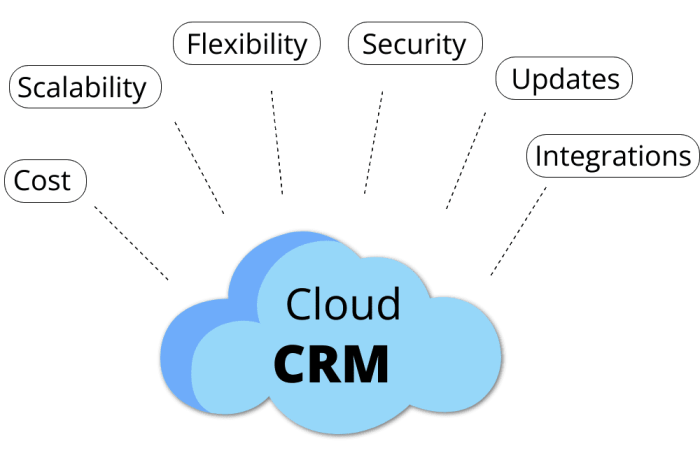
Scaling your CRM isn’t just about adding more users; it’s about building a robust system that can handle increased data volume and complex workflows. Cloud hosting offers a flexible and scalable solution, but understanding the underlying architecture is key to a smooth transition and optimal performance. This section delves into the components of a typical CRM system architecture and how cloud server hosting integrates, making the migration process easier and more efficient.A well-designed CRM system architecture for cloud hosting allows for seamless data access, processing, and storage.
This architecture needs to be adaptable to changing business needs, allowing for future scaling and integration with other systems. Understanding the interplay between CRM components and cloud servers is crucial for maximizing the benefits of cloud hosting.
Components of a Typical CRM System
A typical CRM system comprises several interconnected components. These include:
- Database: The heart of the CRM, storing all customer data, interactions, and transactions. This data is critical for personalized marketing, sales, and support strategies.
- Application Server: Handles the processing and execution of requests from users interacting with the CRM interface. Efficient application servers ensure a responsive user experience, even with high volumes of activity.
- User Interface (UI): The user-facing component, enabling employees to access and manage customer data. A well-designed UI is essential for user adoption and efficiency.
- API (Application Programming Interface): Enables integration with other systems like marketing automation tools, e-commerce platforms, or accounting software. This allows for a unified view of the customer journey.
- Security Measures: Crucial for protecting sensitive customer data from unauthorized access. Robust security protocols are vital, especially in cloud environments.
Cloud Server Hosting Integration
Cloud server hosting provides the infrastructure to house and manage the CRM system components. This includes virtual servers, storage, and networking resources. The cloud provider handles the maintenance and scaling of the infrastructure, freeing up the CRM team to focus on core business functions. This infrastructure typically leverages a distributed architecture to handle the increasing data load.
Migrating a CRM System to Cloud Hosting
Migrating a CRM system to cloud hosting involves several key steps. First, assessing the existing CRM system’s architecture and data volume is crucial. This allows for a precise selection of cloud services that can support the load. Next, data migration strategies are planned and executed to ensure a smooth transition without data loss. Finally, testing and validation are carried out to ensure that the CRM functions seamlessly in the cloud environment.
Thorough testing mitigates the risk of unexpected issues after the migration.
CRM Deployment Models
Different deployment models exist for CRM systems. A SaaS (Software as a Service) model provides a complete CRM solution hosted on the cloud provider’s servers, managed by the provider. A cloud-based, on-premise deployment model offers more control and customization options. A hybrid approach combines elements of both models, allowing businesses to leverage the scalability of the cloud while maintaining some control over specific components.
Data Flow Diagram
The following diagram illustrates the flow of data between the CRM system and cloud servers.
[Illustrative Diagram: A simple diagram showing the CRM application server interacting with the cloud database via API calls. Data flows from the CRM application server to the cloud database and vice versa. Arrows show the direction of data flow, and labels identify the components (CRM application server, cloud database, API).]
The diagram highlights the critical role of the API in facilitating communication and data exchange between the CRM system and the cloud infrastructure. This diagram emphasizes the importance of a well-structured architecture in supporting seamless data flow and scalability.
Strategies for Scaling CRM Data
Scaling your CRM system isn’t just about adding more servers; it’s about managing the massive influx of data that comes with growth. This requires sophisticated strategies for data storage, backup, and retrieval. Effective CRM data management is crucial for maintaining performance, ensuring data integrity, and enabling valuable insights. A robust strategy keeps your CRM humming smoothly even as your business explodes.Effective CRM data management is crucial for maintaining performance, ensuring data integrity, and enabling valuable insights.
A robust strategy keeps your CRM humming smoothly even as your business explodes. You need a system that can handle massive volumes of data while maintaining speed and accuracy.
Data Backup and Recovery Strategies
Data loss is a nightmare for any business. A robust backup and recovery strategy is essential to protect your CRM data from catastrophic events like hardware failures, cyberattacks, or human errors. This proactive approach ensures business continuity and minimizes downtime. Data backups need to be reliable, easily accessible, and quick to restore.
- Regular Backups: Implement automated daily, weekly, and monthly backups. Consider using a combination of full, incremental, and differential backups for optimal efficiency and reduced storage needs. A schedule like daily full backups, weekly incremental, and monthly full backups is often an effective solution. This allows for quick recovery from recent events and retains complete historical data.
- Off-site Backup Storage: Store backups in a geographically separate location to protect against local disasters. Cloud storage is a popular choice, offering secure, scalable, and cost-effective solutions. Cloud providers offer robust security measures, and redundancy to minimize risks of data loss.
- Disaster Recovery Planning: Develop a comprehensive disaster recovery plan outlining procedures for restoring data and systems in case of a major incident. This plan should include detailed steps for restoring data, testing the restoration process, and establishing clear communication channels.
Improving CRM System Performance with Increased Data Volume, How to Scale Your CRM System with Cloud Server Hosting
As your CRM data grows, system performance can suffer. Optimization strategies are vital to maintain responsiveness and efficiency. This involves using the right tools and strategies to ensure the system remains fast and reliable.
- Database Optimization: Regularly review and optimize your database schema. Ensure proper indexing and efficient query structures to reduce query times and enhance overall performance. Consider using a database management system (DBMS) that’s optimized for high-volume data, such as PostgreSQL or MySQL.
- Caching Strategies: Implement caching mechanisms to store frequently accessed data in memory. This reduces database load and significantly speeds up data retrieval. Redis and Memcached are popular caching solutions.
- Load Balancing: Distribute the workload across multiple servers to prevent overload. Load balancing ensures that no single server is overwhelmed, maintaining system stability and performance during peak usage.
Utilizing Cloud-Based Data Storage Solutions
Cloud-based data storage solutions provide scalability, flexibility, and cost-effectiveness for managing large volumes of CRM data. Leveraging the cloud allows businesses to adapt to growing data needs without significant upfront investments in hardware.
- Choosing the Right Cloud Provider: Select a reputable cloud provider with a proven track record and robust security features. Evaluate storage options, backup capabilities, and disaster recovery plans offered by various providers.
- Data Encryption: Ensure your data is encrypted both in transit and at rest. Data encryption safeguards your sensitive information from unauthorized access. Look for providers with strong encryption standards and features.
- Storage Tiering: Implement storage tiering to manage different data access frequency. Store frequently accessed data on faster, more expensive storage tiers and less-frequently accessed data on cheaper tiers to optimize storage costs.
Data Backup and Recovery Solutions
Choosing the right backup and recovery solution is crucial for safeguarding your CRM data. The table below Artikels popular options.
| Solution | Description | Pros | Cons |
|---|---|---|---|
| Cloud Backup Services (e.g., AWS Backup, Azure Backup) | Data backups stored in the cloud, often with automatic replication. | Scalability, accessibility, often automated. | Dependence on cloud provider, potential network issues. |
| On-premises Backup Solutions (e.g., Veeam, Commvault) | Backups stored on dedicated hardware within your facility. | Full control over backups, faster local recovery. | Higher upfront costs, limited scalability, potential for local disaster. |
| Hybrid Backup Solutions | Combine cloud and on-premises solutions for maximum flexibility and security. | Enhanced security, scalability, cost optimization. | Requires more complex configuration and management. |
User Management and Access Control in Scaled CRM
Scaling your CRM means more users, more data, and a higher risk of security breaches if you’re not careful. Proper user management and access control are crucial for maintaining data integrity, preventing unauthorized access, and ensuring smooth operations in a larger team. Think of it like a fortress – you need strong walls and carefully controlled entry points to protect your valuable assets.Effective user management isn’t just about passwords; it’s about establishing clear roles, responsibilities, and permissions that scale with your growing business.
This involves understanding the different levels of access required by different teams and individuals within your organization, from sales reps to marketing managers to executives. The right setup empowers everyone to do their job effectively while preventing anyone from accessing data they shouldn’t.
User Role and Responsibility Management
Establishing a robust structure for user roles and responsibilities is paramount in a scaled CRM system. This involves defining distinct roles (e.g., Sales Representative, Marketing Manager, Admin) and assigning specific permissions to each role. This ensures that only authorized users can access sensitive data or perform crucial actions. For example, a Sales Representative should have read and write access to their own leads and deals, but not be able to modify global settings or access financial reports.
Marketing managers should have access to marketing campaigns and customer data relevant to their campaigns but not to the sales team’s deals.
- Defining clear roles: Each role should have a well-defined set of responsibilities and the corresponding access levels. A Sales Representative role should only have access to their assigned leads, not the entire customer database.
- Assigning specific permissions: Control access to different data types and actions. Sales Representatives should only be able to update their own deals, not those of other reps.
- Regular role reviews: As your business grows, your roles and responsibilities might change. Regularly review and update your role definitions to ensure alignment with current needs.
Security Measures for User Accounts
Robust security measures are essential for protecting user accounts in a scaled CRM. These include strong password policies, multi-factor authentication (MFA), and regular security audits. Implementing these measures significantly reduces the risk of unauthorized access and data breaches.
- Strong password policies: Enforce complex password requirements and regular password changes to prevent password cracking. Consider using a password manager to generate and store strong passwords.
- Multi-factor authentication (MFA): Add an extra layer of security by requiring users to verify their identity with multiple factors (e.g., username/password + a code from an authenticator app or SMS).
- Regular security audits: Regularly review your CRM’s security settings and configurations to identify and address any vulnerabilities. This helps to proactively identify and fix potential security issues.
User Management Tools and Software
Various tools and software solutions are available to streamline user management in a scaled CRM. These tools often provide features for role-based access control, user authentication, and password management.
- Dedicated CRM user management tools: Many CRM platforms offer built-in tools for managing user accounts, roles, and permissions. These tools provide centralized control and simplify the process of assigning permissions.
- Third-party user management solutions: Integrate third-party solutions to handle user accounts and permissions if your CRM doesn’t offer these features. This often gives greater flexibility and customization options.
- Example: If your CRM is on a cloud server, utilize the built-in user management features. If you have a complex system with multiple applications, consider dedicated user management platforms.
Creating a Robust Access Control System
A robust access control system in a scaled CRM should be adaptable, flexible, and easily managed.
Scaling your CRM with cloud hosting is crucial for growth, but what about protecting your assets? A strong legal team is just as important as a robust system. For example, if you’re facing insurance-related issues, an insurance lawyer who guarantees fierce legal representation like the ones at Insurance Lawyer Who Guarantees Fierce Legal Representation can help ensure you’re covered.
Ultimately, having a reliable CRM system and the right legal support are essential for business success.
- Centralized management: Maintain a centralized system for managing user accounts, roles, and permissions. This avoids duplication and inconsistencies across different parts of the organization.
- Granular control: Implement granular control over user access. Define specific permissions for different roles and tasks. This ensures that users only have access to the data and functionalities they need.
- Regular audits and reviews: Regularly review and update your access control system to adapt to evolving business needs and security threats. This helps you stay ahead of potential vulnerabilities.
High Availability and Disaster Recovery
Keeping your CRM system running smoothly, even during unexpected events, is crucial for business continuity. High availability and disaster recovery strategies aren’t just nice-to-haves; they’re necessities in today’s digital landscape. A well-designed system minimizes downtime, protects sensitive data, and ensures your business can continue operating without interruption. Failing to plan for these scenarios can lead to lost revenue, damaged reputation, and significant operational disruptions.
High Availability Strategies
High availability (HA) strategies aim to minimize downtime and ensure continuous operation of the CRM system. These strategies involve redundant components and failover mechanisms. By implementing multiple systems, your business can continue operating even if one system fails.
- Redundant Infrastructure: This involves having backup servers, network connections, and storage systems. If one component fails, another immediately takes over. Think of it like having multiple lanes on a highway – if one lane gets congested, traffic can easily switch to another.
- Load Balancing: Distributing incoming requests across multiple servers prevents any single server from becoming overloaded. This strategy prevents bottlenecks and ensures smooth operation, even with high traffic.
- Failover Mechanisms: A failover mechanism automatically switches to a backup system when the primary system fails. This ensures minimal downtime and maintains business continuity. These mechanisms are critical for maintaining service levels during unexpected outages.
Disaster Recovery Plans
A disaster recovery plan (DRP) Artikels the steps to take to restore the CRM system in the event of a disaster. This plan includes backups, recovery procedures, and communication protocols.
- Data Backup and Replication: Regular backups of CRM data are essential for restoring the system in case of a disaster. Data replication to a secondary location enhances the ability to quickly restore data.
- Off-site Storage: Storing backups in a location physically separate from the primary data center is crucial. This ensures that if the primary location is impacted by a disaster, the backup data remains safe and accessible.
- Recovery Procedures: A well-defined recovery procedure guides the steps for restoring the CRM system. This includes detailed instructions for data restoration, system reconfiguration, and user access restoration.
- Testing: Regularly testing the DRP ensures that the procedures are effective and that the recovery process is smooth. Testing also helps to identify any potential weaknesses or gaps in the plan.
Examples of High Availability Solutions
Several cloud providers offer high availability solutions. For example, Amazon Web Services (AWS) provides tools like Amazon EC2 Auto Scaling, which automatically adjusts the number of servers based on demand. This ensures that resources are available when needed and minimizes potential disruptions.
Importance of Redundancy in Cloud Server Infrastructure
Redundancy in cloud server infrastructure is essential for high availability and disaster recovery. Having multiple servers, storage systems, and network connections reduces the risk of single points of failure. If one component fails, another immediately takes over, maintaining service continuity.
Designing a Disaster Recovery Plan for a Cloud-Hosted CRM
A robust DRP for a cloud-hosted CRM should include these steps:
- Identify Critical Data and Systems: Determine which data and systems are essential for business operations. Prioritize these components for recovery.
- Establish Backup and Recovery Procedures: Artikel the steps to back up and restore data and systems, including frequency and location.
- Define Recovery Time Objectives (RTO) and Recovery Point Objectives (RPO): Establish the maximum acceptable time to restore the system and the maximum acceptable data loss.
- Test and Validate the Plan: Regularly test the DRP to ensure that it is effective and that the recovery process is smooth.
- Document and Communicate: Document the DRP and communicate it to relevant personnel. This ensures everyone understands their roles and responsibilities during a disaster.
Monitoring and Optimization of Scaled CRM
Scaling your CRM isn’t just about adding more servers; it’s about building a system that can adapt and perform flawlessly under increasing load. Monitoring and optimization are crucial for ensuring your scaled CRM continues to deliver value and efficiency. Ignoring these aspects can lead to performance issues, lost data, and frustrated users, ultimately undermining your investment.Effective monitoring and optimization go beyond basic metrics.
They require a proactive approach, anticipating potential problems and adjusting the system in real-time. This allows you to keep pace with your growing business needs and avoid costly downtime or performance bottlenecks.
CRM System Performance Monitoring Tools
Monitoring your CRM’s performance is like having a real-time pulse check on your system’s health. Various tools are available, from simple dashboards to sophisticated monitoring platforms. Choosing the right tools depends on your specific needs and budget. Crucially, the chosen tools must provide actionable insights and allow you to quickly identify and resolve performance issues.
- Application Performance Monitoring (APM) tools like New Relic, Datadog, and Dynatrace offer comprehensive insights into application performance, transaction times, and error rates, enabling you to pinpoint bottlenecks and identify areas for improvement. These tools allow you to visualize key metrics and understand how your CRM system performs under various workloads.
- Database monitoring tools like MySQL Workbench or PostgreSQL tools help in monitoring database queries, response times, and resource utilization. This is critical for understanding the database’s contribution to overall CRM performance.
- Server monitoring tools like Nagios or Zabbix allow you to track server resource usage, CPU, memory, and disk I/O. These tools provide visibility into server health and potential capacity issues, enabling proactive management of your infrastructure.
Monitoring Dashboards for CRM Performance
Customizable dashboards are essential for visualizing key performance indicators (KPIs). A well-designed dashboard provides at-a-glance insights into crucial metrics, enabling quick identification of issues and proactive response.
- User Activity Dashboard: Track login attempts, active users, and average session duration to understand user engagement and potential performance bottlenecks during peak hours. This can highlight user experience issues and reveal where resources might be overtaxed.
- Transaction Processing Dashboard: Monitor average transaction times, error rates, and successful transactions. This will help identify if the transaction processing system is keeping up with the volume of requests and if adjustments are necessary to maintain efficiency.
- Resource Utilization Dashboard: Visualize CPU, memory, and disk I/O utilization to identify potential capacity issues. This proactive approach helps prevent system slowdowns and ensures your infrastructure can handle the expected load.
Strategies for Optimizing CRM Performance on Cloud Servers
Optimizing performance on cloud servers involves leveraging cloud-specific features and strategies. It’s about fine-tuning your system to work efficiently within the cloud environment.
Scaling your CRM with cloud hosting is crucial for growth, just like understanding the intricate mechanics of bitcoin transactions, like those detailed in Bitcoin Transactions: How They Work Behind the Scenes. Choosing the right cloud server allows your CRM to handle massive data volumes and user spikes, ensuring your sales and marketing teams don’t get bogged down.
This flexibility is key for any business aiming to truly scale their operations.
- Caching Strategies: Implementing caching mechanisms can significantly reduce database load and improve response times for frequently accessed data. This ensures that frequently requested information is readily available, reducing the burden on the database.
- Load Balancing: Distributing incoming traffic across multiple servers helps prevent overload on any single server, enhancing performance and reliability. This ensures that no single point of failure can cripple the system.
- Database Optimization: Regularly reviewing and optimizing database queries, indexes, and data structures is essential for ensuring efficient data retrieval. This can be a complex but rewarding process that significantly improves system speed.
Identifying and Addressing Bottlenecks
Identifying bottlenecks in your CRM system is crucial for optimizing performance. A bottleneck is a point in the system where processing slows down, impacting overall performance.
- Analyze Performance Logs: Thoroughly review application and server logs to pinpoint the specific processes or areas causing delays. This process can identify areas of contention and the nature of the bottleneck.
- Monitor System Metrics: Monitor resource utilization and response times to identify patterns and pinpoint bottlenecks. This data-driven approach provides a clear understanding of performance issues and potential solutions.
- Optimize Code and Queries: Review and refine the CRM’s code and database queries to eliminate unnecessary operations and improve efficiency. This often involves understanding the code and making improvements where possible.
Metrics for Measuring CRM Scaling Effectiveness
Metrics provide valuable insight into the success of your CRM scaling efforts. They help you track progress and identify areas for improvement.
- Transaction Processing Rate: The number of transactions processed per unit of time is a key metric for measuring system throughput. It helps gauge how well the system can handle the increasing volume of requests.
- Average Response Time: Tracking the average time taken to respond to user requests helps determine system responsiveness. A reduction in average response time indicates an improvement in performance.
- Error Rate: The percentage of errors occurring during transactions reflects the system’s reliability. Lower error rates are a positive indicator of improved system stability and resilience.
Integration with Other Systems
Integrating your CRM with other business applications is crucial for a seamless workflow and a holistic view of your customers. Think of your CRM as the central hub, and other systems as interconnected spokes. Without proper integration, data silos emerge, hindering your ability to gain actionable insights and optimize your operations. This is where robust API integrations become indispensable.API integrations allow your CRM to talk to other applications, automatically pulling in crucial data like order information, marketing campaign results, or support ticket details.
This real-time data exchange provides a comprehensive customer profile, enabling personalized interactions and targeted campaigns. It’s about connecting the dots and making your data work for you, not against you.
API Integrations for CRM Scaling
API integrations are the backbone of CRM scaling. They enable the CRM system to seamlessly exchange data with other applications, crucial for managing complex interactions and large volumes of data. A robust API allows for real-time updates and automated workflows, improving efficiency and reducing manual data entry. Without proper API integrations, scaling your CRM becomes a cumbersome and error-prone process.
Examples of CRM Integrations
Integrating your CRM with various systems enhances efficiency and provides a more complete customer view. Here are a few examples:
- E-commerce Platforms: Integrating your CRM with your e-commerce platform allows for automatic updates of customer purchase history, order details, and product preferences, enriching your CRM data with crucial sales insights. This real-time data exchange enables personalized recommendations and targeted marketing campaigns. For example, if a customer frequently purchases specific products, your CRM can automatically suggest related items or promotions.
- Marketing Automation Tools: Integrating your CRM with marketing automation tools allows for automated lead nurturing, personalized email campaigns, and targeted ad campaigns. Data from your CRM can be used to segment your audience and tailor your marketing efforts. For instance, you can automatically segment customers based on their purchase history and send them tailored promotional emails.
- Accounting Software: Connecting your CRM to accounting software streamlines invoice generation, payment tracking, and revenue recognition. This automated data exchange improves accuracy and reduces manual errors. For example, when a customer places an order, the order details are automatically fed into your accounting software for billing and payment processing.
- Customer Support Platforms: Integrating your CRM with support platforms like Zendesk or Help Scout automatically tracks customer interactions, including support tickets, feedback, and issue resolution. This comprehensive view of customer interactions helps improve support response times and customer satisfaction.
Managing Third-Party Integrations
Effective management of third-party integrations is critical for CRM scaling. A well-defined integration strategy, including clear communication channels and regular maintenance, is essential for a smooth transition.
- Establish Clear Communication: Maintain clear lines of communication with third-party vendors to ensure compatibility and address potential issues promptly. Open communication channels help resolve problems efficiently and maintain a seamless workflow.
- Regular Maintenance: Regularly review and update integrations to ensure compatibility with evolving software versions and maintain optimal performance. This ensures the integration remains effective and relevant as systems evolve.
- Testing and Validation: Thorough testing of the integration is vital to avoid data discrepancies or disruptions. Testing should cover various scenarios, including data volumes, different user roles, and different data formats. This ensures the integration works as expected under different conditions.
Best Practices for CRM System Integration
Implementing best practices ensures a smooth integration process. These best practices improve efficiency and data accuracy.
- Prioritize Data Security: Securely transfer and store data between systems to prevent data breaches. Implementing robust security protocols ensures the confidentiality and integrity of customer data.
- Standardize Data Formats: Ensure that data formats are consistent across different systems to prevent data inconsistencies and errors. A standardized data format helps streamline data exchange and maintain data integrity.
- Choose the Right Tools: Select integration tools that best fit your specific needs. This includes evaluating the capabilities of various integration platforms to ensure they meet your specific requirements and scalability goals.
- Document Everything: Document all integration steps and processes for easy maintenance and future troubleshooting. A comprehensive documentation process ensures that the integration remains functional and can be maintained effectively.
Last Point
Scaling your CRM with cloud hosting isn’t just about adding more capacity; it’s about building a more agile, resilient, and ultimately, profitable business. This guide has provided a roadmap for optimizing your CRM’s performance, handling data growth, and ensuring business continuity. By understanding the various cloud hosting options, architectural considerations, and data management strategies, you’re equipped to confidently navigate the complexities of CRM scaling and propel your business forward.
Expert Answers
Q: What are the common pitfalls to avoid when scaling a CRM?
A: Choosing the wrong cloud provider, neglecting data backup and recovery, and overlooking user access management are common pitfalls. A well-defined strategy that considers these factors is critical for success.
Q: How do I choose the right cloud server configuration for my CRM?
A: Factors like your data volume, expected user load, and budget will influence your decision. VPS servers are suitable for smaller businesses, while dedicated servers offer more control and resources for larger enterprises.
Q: What are the security implications of cloud-based CRM?
A: Cloud providers offer robust security measures, but you must ensure your own CRM data is properly encrypted and secured. A robust access control system is paramount to protecting your valuable information.
Q: How can I ensure high availability of my cloud-hosted CRM?
A: Implementing redundancy in your cloud infrastructure, having a solid disaster recovery plan, and utilizing monitoring tools are crucial for ensuring your CRM remains operational even during unexpected downtime.