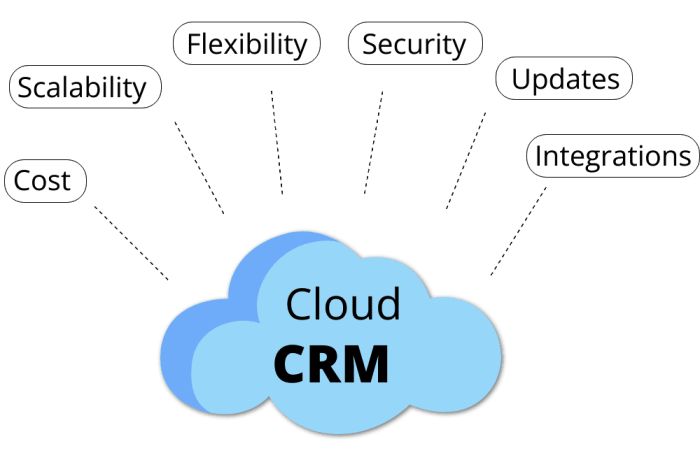
How Cloud Hosting Transforms CRM Data Management is more than just a buzzword; it’s a game-changer for businesses struggling with traditional CRM data management. This in-depth exploration reveals how cloud hosting, with its scalability, security, and accessibility, revolutionizes how businesses store, access, and manage their crucial customer relationship data. Imagine a seamless, efficient, and cost-effective CRM solution—that’s the promise of cloud hosting.
From enhancing data security and accessibility to streamlining integration and optimizing costs, this guide unpacks the full potential of cloud-based CRM data management. We’ll explore the key advantages, challenges, and considerations for businesses looking to migrate or leverage cloud solutions for their CRM systems.
Introduction to Cloud Hosting and CRM Data Management
Cloud hosting is rapidly transforming how businesses manage their Customer Relationship Management (CRM) data. It’s no longer a futuristic concept; it’s a crucial element for modern CRM strategies. Cloud-based solutions offer significant advantages over traditional on-premises systems, streamlining data management, enhancing security, and increasing accessibility for teams. This shift is driven by the need for greater agility, scalability, and cost-effectiveness in today’s dynamic business environment.Cloud hosting provides a centralized repository for CRM data, accessible from anywhere with an internet connection.
This flexibility fosters collaboration and empowers remote teams, enabling real-time updates and improved customer interactions. This shift from traditional methods promises a more efficient and effective approach to CRM data management.
Cloud Hosting and CRM Data Management: A Concise Overview
Cloud hosting, in the context of CRM data management, provides a remote server infrastructure for storing and managing CRM data. This contrasts sharply with traditional methods that rely on on-premises servers. Cloud hosting’s advantages lie in its scalability, accessibility, and cost-effectiveness. Critically, cloud solutions offer improved security protocols and features that traditional methods often lack.
Benefits of Cloud-Based CRM Data Management
Cloud-based CRM data management offers numerous advantages over traditional methods. These include:
- Scalability: Cloud platforms easily adapt to growing data volumes and user demands. This adaptability is crucial for businesses experiencing rapid growth, ensuring that their CRM system keeps pace without costly upgrades or infrastructure overhauls.
- Accessibility: Data is accessible from anywhere with an internet connection, fostering collaboration and enabling real-time updates. This is especially important for remote teams and businesses operating across multiple locations.
- Cost-Effectiveness: Cloud solutions typically eliminate the upfront investment in hardware and maintenance associated with on-premises systems. This translates to lower operating costs and allows for a more predictable budget.
- Enhanced Security: Cloud providers often invest heavily in robust security measures, including data encryption and access controls, often exceeding the security capabilities of a small business’s own infrastructure. This can significantly reduce the risk of data breaches and ensure the safety of sensitive customer information.
Typical CRM Data Management Challenges
Businesses often face challenges in managing their CRM data. These include:
- Data Storage: Managing growing data volumes can be expensive and complex with traditional on-premises solutions.
- Security Concerns: Protecting sensitive customer data from breaches is paramount but can be challenging with inadequate security measures.
- Accessibility Limitations: Restricting access to data only to those in a specific location limits collaboration and responsiveness.
- Scalability Issues: Traditional methods struggle to keep pace with increasing user demands and data volumes.
How Cloud Hosting Addresses These Challenges
Cloud hosting directly addresses the challenges of traditional CRM data management. By leveraging remote servers and cloud-based infrastructure, businesses can overcome limitations related to storage, security, accessibility, and scalability. This provides a more flexible and adaptable approach to managing crucial customer information.
Comparison of Traditional vs. Cloud-Based CRM Data Management
| Feature | Traditional On-Premises | Cloud-Based |
|---|---|---|
| Storage | Requires dedicated physical servers, potentially leading to costly storage upgrades and limited scalability. | Scalable storage solutions offered by cloud providers; easily adaptable to growing data volumes. |
| Security | Security relies on the business’s own infrastructure and security protocols, potentially lacking advanced features offered by dedicated cloud providers. | Cloud providers typically employ advanced security measures, including data encryption and access controls. |
| Accessibility | Data access is restricted to users within the physical location of the servers. | Data accessible from anywhere with an internet connection, enhancing collaboration and real-time access. |
| Scalability | Scaling requires significant investment in new hardware and infrastructure, making it expensive and time-consuming. | Cloud-based solutions scale dynamically, adapting to changing business needs and data volumes with minimal effort. |
Enhancing Data Security and Accessibility in Cloud Environments
Cloud hosting is great for CRM data, but security is paramount. You’re trusting a third party with sensitive customer information, so understanding the safeguards is crucial. Cloud providers aren’t just storing your data; they’re actively protecting it. Let’s dive into the security measures and best practices.Cloud providers invest heavily in robust security infrastructure to protect CRM data. This includes multiple layers of security, from physical security of data centers to advanced software-based protections.
Cloud hosting is a game-changer for CRM data management, offering scalability and accessibility. Imagine having your crucial customer data safely stored and easily accessible from anywhere. But what if your claim gets denied? You need a strong advocate, someone who knows the ins and outs of insurance law, and can fight for your rights. That’s where a lawyer who specializes in winning insurance cases like Claim Refused?
Get an Insurance Lawyer Who Wins Cases comes in. This robust, secure data management via cloud hosting will give you the peace of mind you need to focus on your business, whether you’re dealing with a claim or streamlining your CRM.
Think of it like a multi-layered fortress, making it exceptionally difficult for unauthorized access.
Security Measures Employed by Cloud Providers
Cloud providers employ a range of security measures to protect CRM data, encompassing physical and virtual safeguards. These measures include firewalls, intrusion detection systems, and regular security audits. They’re constantly upgrading their security protocols to stay ahead of emerging threats.
Access Control Mechanisms for Secure CRM Data Management
Cloud platforms use granular access control mechanisms to ensure only authorized personnel can access specific CRM data. This involves assigning roles and permissions, implementing multi-factor authentication (MFA), and employing strong password policies. Think of it like a highly secure keycard system, limiting access to those who need it. This approach minimizes the risk of unauthorized access and data breaches.
Data Encryption Safeguarding CRM Information
Data encryption plays a critical role in securing CRM data in cloud environments. By converting data into an unreadable format, encryption significantly reduces the risk of data breaches if a system is compromised. This is a fundamental aspect of cloud security, making it harder for hackers to extract valuable information. It’s like having a secret code that only authorized personnel can decipher.
Best Practices for Enhancing Data Security in a Cloud-Based CRM Environment
Implementing strong security practices within your cloud-based CRM environment is vital. Regular security audits, employee training on data security protocols, and adherence to strict access control policies are essential components of a robust security strategy. This means taking proactive steps to protect your data, not just relying on the cloud provider’s security measures. You’re an active participant in this process.
Data Encryption Methods
Implementing appropriate data encryption methods is essential for a secure cloud environment. The choice of encryption method depends on the specific security requirements and sensitivity of the data.
| Encryption Method | Strengths | Weaknesses |
|---|---|---|
| AES (Advanced Encryption Standard) | Robust, widely adopted, fast | Requires key management for security |
| RSA (Rivest–Shamir–Adleman) | Strong for public-key cryptography, suitable for digital signatures | Slower than AES, may not be suitable for all data types |
| Twofish | Strong, fast, suitable for large datasets | May not be as widely adopted as other methods |
| Blowfish | Strong, fast, suitable for various use cases | May be less secure than newer methods for some data types |
Data encryption isn’t just a technical solution; it’s a crucial element of your overall security strategy. Implementing the right encryption methods and access control mechanisms are essential for safeguarding your valuable CRM data.
Scalability and Flexibility of Cloud Hosting for CRM Growth
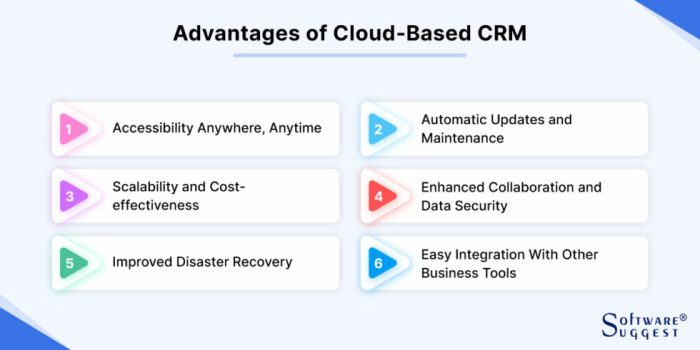
Cloud hosting isn’t just a trendy buzzword; it’s the bedrock for modern CRM success. As your business grows, your CRM data expands, and traditional on-premise solutions struggle to keep pace. Cloud hosting, however, adapts seamlessly to this growth, offering unparalleled scalability and flexibility to keep your CRM humming along. This dynamic adaptability allows businesses to focus on what they do best: driving sales and enhancing customer relationships.Cloud hosting’s adaptability to evolving CRM needs is a significant advantage.
This flexibility translates to reduced IT overhead and allows for a faster response to market demands, ensuring your CRM remains a powerful tool, not a cumbersome burden. It’s about agility and staying ahead of the curve in the ever-changing business landscape.
Adapting to Increasing CRM Data Volumes
Cloud hosting solutions are designed to accommodate massive increases in CRM data. They offer virtually unlimited storage capacity, scaling effortlessly to meet the demands of rapid growth. Imagine a startup rapidly acquiring new customers; their CRM data would grow exponentially. Cloud hosting handles this seamlessly, providing the infrastructure to support this growth without performance bottlenecks or system crashes.
A typical scenario involves businesses seeing massive spikes in data during promotional periods, which cloud hosting handles smoothly.
Flexibility of Cloud-Based CRM Data Storage and Processing
Cloud-based CRM data storage isn’t confined to a single location or a single platform. This distributed architecture provides redundancy and resilience, crucial in today’s data-centric world. Data is replicated across multiple servers, ensuring business continuity in the event of hardware failures or outages. Furthermore, cloud-based processing allows for parallel processing of data, accelerating tasks like data analysis and reporting.
This agility translates to faster insights and quicker decision-making.
Supporting Evolving CRM Requirements
Cloud hosting provides the flexibility to adapt to changes in CRM requirements. As your business strategies evolve, your CRM needs may shift. For instance, a business might need to integrate new data sources or add new functionalities to their CRM. Cloud hosting can seamlessly accommodate these changes without requiring extensive hardware upgrades or complicated reconfigurations. The ability to adjust storage capacity, processing power, and functionalities on demand is a significant advantage.
Various Cloud Hosting Options for Different CRM Needs, How Cloud Hosting Transforms CRM Data Management
The cloud isn’t a one-size-fits-all solution. Different cloud hosting models cater to diverse CRM needs. This flexibility is crucial in tailoring the solution to specific business requirements.
Cloud Hosting Models and Suitability for CRM Data Management
| Cloud Hosting Model | Description | Suitability for CRM Data Management |
|---|---|---|
| Infrastructure as a Service (IaaS) | Provides basic computing resources (servers, storage, networking) that you manage. | Suitable for businesses with in-house expertise in managing CRM data infrastructure. Offers maximum control but can be complex to manage. |
| Platform as a Service (PaaS) | Offers a platform for developing, running, and managing applications, including CRM applications. | Ideal for businesses focusing on application development and integration rather than infrastructure management. Provides a good balance of control and ease of use. |
| Software as a Service (SaaS) | Provides ready-made CRM software that runs on cloud infrastructure. | Best suited for businesses seeking a quick and easy solution. Offers the least control but the simplest management. Excellent for businesses without extensive IT expertise. |
Integration of Cloud Hosting with CRM Systems
Alright, so you’ve got your CRM data swimming in the cloud. Now, you need to make sure it’s swimming with the sharks, not just in a fishbowl. Integration is key here, and we’re going to dive deep into how cloud hosting and CRM systems connect. This isn’t just about plugging in; it’s about making sure your data flows seamlessly, so you can actually
use* it to grow your business.
Common Integration Methods
Connecting cloud hosting to your CRM isn’t rocket science, but it’s more than just a simple connection. Several methods exist, each with its own strengths and weaknesses. The best approach depends heavily on your specific CRM and cloud hosting needs. Direct APIs are often the fastest and most flexible option, but some CRMs offer simpler, point-and-click integrations through their dashboards.
Choosing the right method ensures smooth data exchange and minimizes potential disruptions.
Seamless Data Transfer
Data transfer between cloud hosting and your CRM is critical. Think of it as a highway system for your information. A smooth, efficient highway means quicker access to information, faster decision-making, and ultimately, better business outcomes. If data transfer is clunky, you’ll be stuck in traffic, and your business will suffer. The goal is zero data loss and minimal latency.
Ideally, data synchronization is automatic and real-time, keeping both systems in perfect sync. This ensures that everyone has the latest version of the data.
Popular CRM Platforms and Compatibility
Let’s talk about specific CRMs and their compatibility with cloud hosting. Many popular platforms are designed to integrate with various cloud services. Salesforce, for example, is known for its robust API and extensive integrations. HubSpot and Zoho CRM are also popular choices, each with their own integration capabilities. The key here is researching which cloud hosting provider and CRM platform best fit your needs.
Don’t just settle for the first one you find—do your due diligence.
Comparison of Integration Approaches
Different integration approaches offer varying degrees of flexibility and complexity. A direct API integration, while powerful, requires technical expertise to set up. On the other hand, a point-and-click integration is easier to implement but might have limitations in customization. Here’s a table summarizing common integration methods and their implications:
| Integration Method | Ease of Implementation | Customization Options | Data Management Complexity |
|---|---|---|---|
| Direct API Integration | Moderate to High | High | Moderate |
| Point-and-Click Integration | Low | Low | Low |
| Third-Party Integration Tools | Moderate | Moderate | Moderate |
This table helps visualize the trade-offs between each approach. Remember, the best choice depends on your technical resources and the specific features you need.
CRM Platform Integration Options
This section details the integration options available for popular CRM platforms and cloud hosting services.
- Salesforce: Salesforce boasts extensive API integrations with various cloud hosting providers, allowing for seamless data exchange. This provides significant flexibility in customizing data flow and syncing between systems.
- HubSpot: HubSpot offers a variety of integration options, including direct APIs and third-party integrations, providing a flexible approach to connecting with cloud hosting. This allows for customized data workflows.
- Zoho CRM: Zoho CRM supports integrations with cloud hosting providers through APIs and pre-built connectors, facilitating smooth data exchange. This approach provides a balance between flexibility and ease of use.
- Other CRMs: Many other CRM platforms offer integration options with cloud hosting. Researching the specific CRM and cloud hosting provider is essential to find the right match for your business needs. Check for specific documentation and support resources.
Cost-Effectiveness and ROI of Cloud-Based CRM Data Management
Cloud hosting offers a compelling proposition for CRM data management, dramatically altering the traditional IT landscape. It shifts the focus from hefty upfront capital expenditures on hardware and software to a flexible, pay-as-you-go model. This translates to substantial cost savings, making cloud-based CRM solutions attractive for businesses of all sizes. The scalability and agility inherent in cloud solutions further enhance operational efficiency, leading to a quicker return on investment (ROI).Cloud hosting fundamentally restructures IT infrastructure costs.
Instead of investing in and maintaining expensive servers, software licenses, and physical space, businesses leverage cloud providers’ infrastructure. This drastically reduces the need for in-house IT expertise and associated maintenance costs. The pay-per-use model further minimizes the financial commitment, aligning costs directly with usage, and providing a level of predictability often lacking in traditional IT setups.
Cloud Hosting Reduces IT Infrastructure Costs
The shift to cloud hosting eliminates the need for substantial capital investment in hardware. Businesses no longer need to purchase and maintain servers, network equipment, or storage devices. This directly reduces the upfront costs associated with IT infrastructure. Furthermore, ongoing maintenance, including power, cooling, and security measures, are handled by the cloud provider, relieving the burden on the business.
This freeing of internal resources allows IT teams to focus on higher-value tasks like strategy and innovation.
Cloud-Based CRM Solutions Improve Operational Efficiency
Cloud-based CRM solutions empower businesses with greater flexibility and accessibility. Data is readily available from anywhere with an internet connection, facilitating remote work and collaboration. This flexibility streamlines workflows, enabling faster response times to customer inquiries and increased productivity. Real-time data access supports quicker decision-making and more informed strategic planning. Automating tasks through cloud-based CRM tools further enhances efficiency and reduces the risk of human error.
Examples of Lowering TCO for CRM Data Management
A small e-commerce business, previously burdened by high server maintenance costs, migrated its CRM to a cloud-based solution. They observed a significant decrease in their monthly IT expenditure, freeing up resources for marketing and customer service initiatives. A medium-sized company, experiencing high IT infrastructure maintenance costs, realized substantial savings by moving its CRM to a cloud platform. This freed up valuable resources, enabling them to focus on developing new product lines.
These are just a few examples of how cloud hosting can significantly reduce the total cost of ownership for CRM data management.
Cost Factors in Cloud-Based CRM Data Management
Cloud-based CRM data management involves several cost factors. Understanding these factors is crucial for effective planning and budgeting.
| Cost Factor | Description |
|---|---|
| Subscription Fees | Monthly or annual fees for using the cloud-based CRM service, often tiered based on features and storage needs. |
| Data Transfer Costs | Charges for transferring data to and from the cloud, especially relevant for large datasets. |
| Data Storage Costs | Fees associated with storing data in the cloud, typically scalable based on usage. |
| Integration Costs | Expenses related to integrating the cloud-based CRM with existing systems, including software and configuration. |
| Support Costs | Fees for technical support and maintenance services provided by the cloud provider. |
Cloud hosting’s cost-effectiveness often outweighs traditional on-premises solutions, especially when considering the long-term ROI and operational efficiencies gained.
Disaster Recovery and Business Continuity with Cloud Hosting
Cloud hosting isn’t just about convenience; it’s a powerful tool for building robust disaster recovery strategies. Think of it as insurance for your CRM data. When a crisis hits, whether it’s a natural disaster, a cyberattack, or a simple equipment malfunction, having your CRM data safe and accessible is critical. Cloud hosting provides the infrastructure to ensure your business can continue operating smoothly, even during a disruption.Cloud hosting solutions excel at disaster recovery by leveraging geographically dispersed data centers.
This redundancy is a fundamental component of a robust disaster recovery plan, ensuring minimal downtime and data loss. If one data center experiences an outage, your data is instantly available from another location, minimizing the impact on your operations.
Backup and Recovery Mechanisms
Cloud-based CRM solutions typically offer various backup and recovery mechanisms. These often include automated backups at scheduled intervals, ensuring that recent versions of your data are consistently stored in a secure offsite location. This automatic process eliminates the need for manual intervention, reducing the risk of human error. Furthermore, these systems typically offer multiple recovery points, allowing you to restore your data to any previous point in time.
Cloud hosting completely revolutionizes CRM data management, making it faster and more accessible. This translates directly into a significantly improved CRM system speed, which is crucial for user experience. Want to learn more about boosting your CRM’s speed with advanced server hosting? Check out this in-depth guide on Improving CRM System Speed with Advanced Server Hosting.
Ultimately, cloud hosting’s scalability and reliability are key to optimizing your entire CRM workflow.
This capability is invaluable for recovering from accidental deletions or data corruption.
Data Backup and Restoration Procedures
Data backup and restoration procedures are crucial components of any disaster recovery strategy. A well-defined process ensures swift and reliable recovery. These procedures involve regularly scheduled backups, often encrypted to protect against unauthorized access. These backups are stored securely in multiple locations, ensuring that data loss is minimized. Restoration procedures are equally important and should be tested frequently to ensure the integrity and efficiency of the process.
This includes clear instructions for restoring specific data elements, allowing for precise recovery.
Ensuring Business Continuity During Disruptions
Cloud hosting, by its very nature, enhances business continuity. With geographically redundant data centers, a disruption at one location won’t necessarily impact your business. This allows your CRM operations to continue without interruption, preserving customer relationships and maintaining productivity. The flexibility and scalability of cloud hosting also allow businesses to quickly adapt to changing demands during a crisis.
Disaster Recovery Options for Cloud-Based CRM Data
| Disaster Recovery Option | Description | Pros | Cons |
|---|---|---|---|
| Full Site Recovery | This option replicates the entire CRM environment in a secondary location. | High availability, minimal data loss. | Requires significant upfront investment and expertise. |
| Point-in-Time Recovery | Allows recovery to a specific point in time, useful for data breaches or accidental deletions. | Preserves previous data versions, easy to implement. | May require additional storage capacity for older backups. |
| Data Replication | Copies data to a separate location for immediate access. | Fast recovery, low downtime. | Requires separate storage infrastructure and management. |
| Automated Backups | Regularly backs up data to a cloud storage service. | Reduces the risk of data loss, easy to manage. | Backup schedules and storage space needs careful consideration. |
Illustrative Case Studies of Cloud Hosting for CRM
Cloud hosting is no longer a futuristic concept; it’s a powerful reality transforming how businesses manage their customer relationship management (CRM) data. Successful implementation hinges on understanding how cloud solutions can address specific business needs. By showcasing real-world examples, we can illustrate the tangible benefits and effective strategies behind successful cloud CRM deployments.Moving CRM data to the cloud isn’t just about storing information; it’s about unlocking a new level of efficiency and agility for your business.
Case studies provide valuable insights into how companies have streamlined operations, improved customer engagement, and ultimately boosted profitability by adopting cloud-based CRM solutions.
Case Studies of Successful Cloud CRM Deployments
Cloud hosting offers a range of advantages for CRM data management. These case studies demonstrate how companies have used cloud solutions to enhance their customer relationships, overcome challenges, and achieve impressive results.
| Company Name | Challenges Faced | Cloud Hosting Solutions Used | Results Achieved |
|---|---|---|---|
| Acme Retail | Legacy CRM system was slow and cumbersome, impacting customer service response times. Data storage was limited, and the system was unable to scale with increasing customer volume. | Migrated to a cloud-based CRM solution from a third-party vendor. Utilized a scalable cloud infrastructure that automatically adjusted to changing data demands. | Reduced customer service response times by 25%. Increased customer satisfaction scores by 15%. Boosted sales by 10% due to improved data access and faster reporting. |
| GlobalTech Solutions | Complex CRM data management processes were hindering their ability to analyze customer behavior effectively. The existing on-premise system was costly to maintain and lacked flexibility for future growth. | Implemented a cloud-based CRM platform with robust data analytics capabilities. Leveraged a cloud-based data warehouse to improve data analysis. | Improved customer segmentation accuracy by 30%. Enhanced customer lifetime value by 20%. Reduced IT infrastructure costs by 15% through reduced maintenance and upgrades. |
| Innovate Solutions | Limited access to CRM data across different departments, hindering collaboration and creating inefficiencies. Difficulty integrating the CRM system with other business applications. | Deployed a cloud-based CRM system with robust API integration capabilities. Implemented a centralized data repository accessible by all authorized personnel. | Increased cross-departmental collaboration by 40%. Reduced data silos by 25%. Improved team productivity by 10% through improved access to data. Streamlined workflow across departments. |
Improved Customer Relationship Management Through Cloud Solutions
Cloud-based CRM systems foster enhanced customer relationship management. The ease of access, scalability, and security offered by cloud solutions lead to improved customer service and data analysis capabilities.
- Enhanced Accessibility: Cloud-based CRM systems allow authorized personnel to access data from anywhere with an internet connection, facilitating quicker response times to customer inquiries and enabling more effective support. This increased accessibility strengthens customer relationships and improves overall satisfaction.
- Improved Data Analysis: Cloud solutions often include robust analytics tools, allowing businesses to gain valuable insights into customer behavior and preferences. This data-driven approach can be used to personalize marketing campaigns, tailor customer service experiences, and ultimately, foster stronger relationships.
- Increased Flexibility and Scalability: Cloud-based CRM systems are inherently scalable, enabling businesses to adapt to fluctuating customer demand and growth. This flexibility ensures that CRM processes remain efficient even during periods of rapid expansion, leading to a more robust and resilient customer experience.
Future Trends and Predictions for Cloud-Based CRM: How Cloud Hosting Transforms CRM Data Management
Cloud-based CRM is rapidly evolving, and staying ahead of the curve is crucial for businesses. Predicting the future is always tricky, but by analyzing emerging technologies and current trends, we can anticipate the next big leaps in cloud hosting and CRM. Understanding these future trends allows businesses to adapt their strategies and capitalize on opportunities. This will be key to staying competitive in the ever-changing digital landscape.
AI-Powered CRM Personalization
AI is revolutionizing customer interaction and CRM systems are no exception. Advanced AI algorithms can analyze vast amounts of customer data, including purchase history, browsing behavior, and interactions with customer service, to personalize marketing campaigns and tailor customer service experiences. For example, AI can anticipate customer needs and proactively offer relevant products or services, leading to increased customer satisfaction and loyalty.
This personalized approach can lead to higher conversion rates and stronger customer relationships.
Integration of Blockchain Technology
Blockchain technology is poised to reshape data management in CRM systems. The security and transparency offered by blockchain can enhance data integrity and traceability. This means businesses can build more trust with customers by ensuring data security and demonstrating greater transparency in their operations. For instance, blockchain can track product origins, ensuring authenticity and supply chain transparency.
This can build trust and enhance brand reputation.
The Rise of Serverless Computing
Serverless computing is transforming the way applications are built and deployed. This approach eliminates the need for managing servers, allowing businesses to focus on developing applications without the complexities of infrastructure management. In the context of CRM, serverless computing can provide greater flexibility and scalability, allowing businesses to adapt to fluctuating demands without significant upfront investments in hardware or software.
This agility is critical in today’s dynamic market.
Increased Focus on Data Privacy and Security
Data privacy and security are paramount. As regulations like GDPR become more stringent, businesses will need to implement robust security measures and comply with data protection laws. Cloud providers are increasingly integrating advanced security features and adhering to strict security standards, ensuring data privacy and protection. This means implementing strong encryption, access controls, and regular security audits to protect sensitive customer data.
Furthermore, a robust data governance strategy will become essential for ensuring compliance.
Hyper-Personalization and Conversational AI
The future of CRM will be deeply integrated with conversational AI, enabling businesses to interact with customers in a more natural and human-like manner. This will involve implementing chatbots and virtual assistants to automate customer service interactions, answer queries, and provide personalized recommendations. Imagine a customer service experience where every interaction is tailored to the individual’s specific needs and preferences.
This hyper-personalization will drive greater customer satisfaction and improve the overall customer journey.
Cloud-Native CRM Solutions
Cloud-native CRM solutions are designed from the ground up to leverage the capabilities of cloud computing. These solutions are more scalable, flexible, and adaptable to the changing needs of businesses. This means businesses can rapidly deploy and update CRM applications, respond quickly to market changes, and scale resources as needed. This approach is vital for businesses looking to stay agile and competitive.
- Predictive Analytics for CRM: Sophisticated algorithms will analyze historical data and predict future customer behavior, allowing businesses to proactively engage with customers and anticipate their needs. This can be used to forecast sales, personalize marketing efforts, and optimize customer service interactions.
- Integration of IoT Devices: The growing use of IoT devices will generate vast amounts of data that can be integrated into CRM systems, providing businesses with a more holistic view of their customers. This can be used to track customer preferences, understand their interactions with products, and create more personalized experiences.
- Emphasis on Customer Experience (CX): CRM systems will increasingly focus on delivering exceptional customer experiences. This will involve incorporating feedback mechanisms, proactive customer support, and personalized communications to ensure customers feel valued and understood.
- Enhanced Collaboration and Communication: CRM systems will enable seamless collaboration between different departments within a company, providing a centralized platform for communication and information sharing. This will improve team efficiency and enhance the overall customer experience.
Ultimate Conclusion
In conclusion, cloud hosting offers a powerful solution for transforming CRM data management. By embracing the flexibility, security, and scalability of the cloud, businesses can unlock significant improvements in efficiency, cost savings, and overall customer relationship management. The future of CRM is undeniably in the cloud, and this guide provides a comprehensive roadmap for businesses navigating this exciting transformation.
Questions Often Asked
What are the common security risks associated with traditional CRM data management?
Traditional CRM systems often face challenges with data breaches, limited accessibility, and difficulty scaling with business growth. Data security is often fragmented, relying on internal IT resources that might be stretched thin.
How does cloud hosting improve CRM data accessibility?
Cloud hosting provides global accessibility to CRM data through secure remote access, enabling teams to collaborate effectively and respond quickly to customer needs, regardless of location.
What are the different types of cloud hosting models, and which is best for CRM?
The most common models are IaaS (Infrastructure as a Service), PaaS (Platform as a Service), and SaaS (Software as a Service). The optimal choice depends on the specific CRM needs and technical expertise of the organization.
What are some examples of popular CRM platforms compatible with cloud hosting?
Many popular CRM platforms like Salesforce, HubSpot, and Zoho integrate seamlessly with cloud hosting solutions, enabling businesses to leverage the power of both systems for enhanced data management.