
Improving CRM Performance Through Efficient Hosting is crucial for any business relying on this software. Poor hosting can cripple your CRM, leading to slowdowns, data loss, and ultimately, lost revenue. This comprehensive guide dives deep into the critical factors that affect CRM performance, from choosing the right hosting type to optimizing server configurations and implementing robust security measures.
We’ll explore strategies to ensure your CRM runs smoothly, reliably, and scales with your business needs.
Understanding the interplay between CRM software, hosting infrastructure, and security protocols is paramount. This guide breaks down the essential components, providing actionable steps to optimize your CRM environment for peak performance and a seamless user experience.
Understanding CRM Performance Bottlenecks: Improving CRM Performance Through Efficient Hosting

Crushing your CRM’s performance is a major pain point for businesses. It’s not just about fancy dashboards and pretty reports; it’s about the
- actual* user experience and the
- real* impact on your bottom line. Slow loading times, clunky interfaces, and data errors can lead to lost opportunities, frustrated employees, and ultimately, a less efficient business. Let’s dive deep into the bottlenecks and how poor hosting can be a major culprit.
Poor hosting isn’t just a minor inconvenience; it’s a significant factor in a CRM’s overall performance. Inefficient servers can lead to everything from slow response times to data corruption. This means your sales team is spending more time waiting for data to load, your marketing team is struggling to access critical reports, and your entire operation is less productive.
This isn’t just theory; it’s a tangible problem impacting real businesses every day.
Common CRM Performance Issues
Poor CRM performance manifests in various ways. Slow response times, especially during peak hours, are a frequent complaint. This often results in frustrating delays for users, especially those dealing with large datasets or complex workflows. Data integrity issues, such as missing or corrupted data, are equally problematic, leading to inaccurate reports and potentially costing the business money.
Users might also experience frequent crashes, errors, and unexpected downtime, which severely impacts productivity and operational efficiency.
Examples of Inefficient Hosting Impact
Inefficient hosting can directly contribute to the performance issues mentioned above. If your CRM is hosted on a server with limited resources, it can struggle to handle peak user loads, resulting in slowdowns and frustrations. A poorly configured database can also lead to data retrieval problems, making reports inaccurate or unavailable. Additionally, inadequate server security can expose the system to outages and data breaches, costing significant time and money.
Key Metrics for Evaluating CRM Performance
Several key metrics are crucial for evaluating CRM performance. Response time, measured in seconds, is a direct indicator of the system’s speed. Error rates, which should be as close to zero as possible, reflect data integrity and system stability. User satisfaction, gathered through feedback mechanisms, gives a crucial insight into the overall user experience. Database size and complexity, as well as concurrent user count, can also reveal potential bottlenecks in the system.
Types of CRM Software and Performance Requirements
Different CRM software cater to varying business needs and sizes. Enterprise-level CRMs, designed for large organizations with complex workflows and extensive data, often require robust hosting solutions that can handle high traffic volumes and large datasets. Mid-market CRMs, suitable for medium-sized businesses, have moderate performance requirements, while smaller businesses may benefit from cloud-based solutions with more streamlined features.
Comparison of CRM Solutions and Hosting Options
| CRM Solution | Hosting Option | Typical Performance | Potential Issues |
|---|---|---|---|
| Salesforce | Cloud, On-Premise | Generally high performance due to robust infrastructure. | High costs for on-premise; cloud performance depends on Salesforce’s infrastructure. |
| Zoho CRM | Cloud | Good performance for mid-market businesses. | May experience some limitations with very large datasets or extremely high concurrent users. |
| HubSpot CRM | Cloud | Excellent cloud-based performance, particularly for smaller to mid-sized businesses. | Potential limitations with very high concurrent user counts in highly demanding situations. |
| Microsoft Dynamics 365 | Cloud, On-Premise | Highly configurable performance depending on the deployment model. | High costs for on-premise; potential complexities in configuration and customization. |
This table highlights potential performance differences based on the CRM solution and hosting choice. A thorough assessment of your specific needs and budget is crucial for selecting the optimal solution. Factors such as expected user volume, data size, and technical expertise should be considered.
Impact of Hosting Infrastructure on CRM Performance
So, you’ve got your CRM dialed in, but your hosting is holding you back? Bad hosting isn’t just a minor annoyance; it’s a productivity killer. Think about it: a slow, unreliable CRM system hurts sales, customer service, and overall business efficiency. Choosing the right hosting infrastructure is crucial for maximizing CRM performance. Let’s dive deep into the specifics.The performance of your CRM system isn’t just about the software itself; it’s heavily influenced by the underlying infrastructure.
This means everything from the type of hosting (cloud or on-premises) to the server specifications, network bandwidth, and even the hosting provider all play a critical role in how smoothly your CRM runs. This isn’t rocket science, but understanding these factors is key to preventing bottlenecks and maximizing efficiency.
Cloud vs. On-Premises Hosting
Cloud hosting offers scalability and flexibility, making it ideal for growing businesses. On-premises hosting, while potentially offering more control, typically requires significant upfront investment and ongoing maintenance. The choice between these two often comes down to factors like budget, technical expertise, and the need for specific customization. Cloud hosting generally provides better scalability and can be more cost-effective in the long run for companies with fluctuating needs.
Server Specifications and CRM Performance, Improving CRM Performance Through Efficient Hosting
Server specifications directly impact CRM performance. A powerful CPU and ample RAM are essential for handling complex CRM operations and large datasets. Sufficient storage space is crucial for storing customer data and application files. Insufficient resources lead to slow response times, data loss, and ultimately, a poor user experience. For example, a CRM handling thousands of users and massive amounts of data needs a server with a robust CPU and substantial RAM.
Underpowered servers will struggle to keep up, leading to sluggish performance.
Network Bandwidth and Latency
Network bandwidth and latency are critical for CRM responsiveness. High bandwidth allows for faster data transfer, crucial for activities like data import/export and real-time reporting. Low latency minimizes delays, ensuring a seamless user experience. Poor network performance can significantly hinder CRM functionality, causing sluggishness and frustration for users. Imagine a sales team struggling to access customer data because the network is constantly overloaded.
That’s a clear sign of insufficient bandwidth and high latency.
Hosting Provider Comparison
Different hosting providers offer varying levels of support and resources. Factors like reliability, uptime, and customer support are crucial for CRM performance. A provider with a strong track record of uptime and dedicated support can minimize disruptions and ensure your CRM system remains operational. Researching providers, comparing their service levels, and understanding their track record for reliability is key.
Impact of Hosting Configurations on CRM Response Time
| Hosting Configuration | CPU | RAM | Storage | Bandwidth | Latency | Estimated Response Time (seconds) |
|---|---|---|---|---|---|---|
| Basic Cloud | Dual-core | 4 GB | 100 GB | 10 Mbps | 50 ms | 5-10 |
| Standard Cloud | Quad-core | 8 GB | 200 GB | 20 Mbps | 20 ms | 2-5 |
| High-Performance Cloud | 8-core | 16 GB | 500 GB | 50 Mbps | 10 ms | 1-2 |
This table illustrates the potential effect of different hosting configurations on CRM response time. Higher-end configurations with more powerful CPUs, RAM, storage, and bandwidth generally lead to faster response times. Choosing the right configuration for your CRM needs is essential for optimal performance.
Optimizing CRM Hosting for Efficiency
So, you’ve nailed down the bottlenecks and understand the impact of your hosting infrastructure on CRM performance. Now, let’s get tactical. Optimizing your CRM hosting isn’t just about picking a faster server; it’s about crafting a system that scales with your business, handles spikes in user activity, and keeps your data humming along smoothly. We’re talking about a system that’s as resilient as a mountain goat and as responsive as a caffeinated squirrel.Efficient hosting isn’t a one-size-fits-all solution.
It demands a deep understanding of your specific CRM needs, user volume, and anticipated growth trajectory. This involves proactively designing your hosting infrastructure to handle future demands and ensuring high availability. Think of it as building a robust, scalable, and reliable foundation for your CRM success.
Boosting CRM performance hinges on efficient hosting. Choosing the right server for your CRM system directly impacts your customer experience. This is crucial for optimizing customer satisfaction and loyalty, as highlighted in the article on Optimizing Customer Experience with CRM Server Hosting. Ultimately, a well-hosted CRM translates to happier customers and a more profitable business, making efficient hosting a key component of your overall CRM strategy.
Design Strategies for Improving CRM Performance
Effective design strategies are crucial for a high-performing CRM system. These strategies focus on leveraging modern architecture principles to ensure optimal resource utilization and user experience. This means designing the entire system with performance in mind, from the database structure to the application code.
- Employing a Cloud-Native Architecture: A cloud-native architecture leverages the scalability and elasticity of cloud platforms. This allows you to dynamically adjust resources based on fluctuating demands. For instance, during peak sales periods, you can automatically provision more resources to handle the increased load without impacting performance.
- Choosing the Right Database: The choice of database significantly impacts CRM performance. A database optimized for transactional workloads, like a NoSQL database, might be ideal for certain CRM implementations. Consider factors like data volume, query complexity, and anticipated growth when selecting a database. For example, a relational database might be more appropriate for a CRM with complex relationships between data points.
- Implementing a Microservices Architecture: A microservices architecture allows for independent scaling of different parts of your CRM application. This is particularly beneficial for complex CRMs where specific components might have varying performance needs. This approach also allows for easier updates and maintenance, preventing a single component failure from bringing down the entire system.
Scaling CRM Hosting Resources
Scaling resources to meet user demands is a critical aspect of maintaining high CRM performance. It involves proactively anticipating growth and adjusting resources to prevent performance degradation.
- Auto-Scaling Mechanisms: Implementing auto-scaling mechanisms allows the system to dynamically adjust resources based on real-time demand. This means adding more server capacity automatically when user load increases, and freeing up resources when demand subsides. Cloud providers offer robust auto-scaling solutions that can handle varying load patterns effectively.
- Predictive Modeling: Analyzing historical user behavior and patterns to predict future demand allows for proactive resource allocation. Tools and techniques exist to identify trends and project future user load, enabling you to scale your infrastructure in advance, preventing performance bottlenecks.
- Monitoring and Alerting: Implementing robust monitoring and alerting systems is essential for detecting potential bottlenecks and performance issues. This allows for timely adjustments to resources before problems impact users. Alerting systems provide notifications for potential issues, enabling swift responses and preventing major outages.
Load Balancing and Failover Mechanisms
Load balancing and failover mechanisms are essential for high availability and ensuring continuous CRM operation. They distribute traffic across multiple servers and provide a backup plan in case of server failure.
- Implementing Load Balancers: Load balancers distribute incoming requests across multiple servers, preventing overload on any single server. This improves performance and availability. Modern load balancers can intelligently distribute traffic based on various factors like server load and response time.
- Creating Failover Strategies: Implementing failover mechanisms ensures that if one server fails, the CRM application can seamlessly transition to a backup server. This ensures minimal downtime and maintains service continuity for users.
Caching and Data Optimization
Caching and data optimization techniques play a significant role in improving CRM performance. They reduce the amount of data that needs to be processed, leading to faster response times and a better user experience.
- Implementing Caching Strategies: Caching frequently accessed data can significantly improve response times. This reduces the load on the database and other backend systems, improving overall performance. Choosing appropriate caching strategies, like object caching or query caching, is essential.
- Optimizing Database Queries: Efficient database queries are crucial for minimizing response times. Analyzing and optimizing database queries can significantly reduce processing time, improving overall CRM performance. Tools are available to analyze and optimize queries.
Strategies for Optimizing CRM Hosting
The table below Artikels various strategies for optimizing CRM hosting. These strategies address different aspects of the hosting infrastructure and aim to provide a comprehensive approach to maximizing performance and minimizing downtime.
| Strategy | Description | Impact |
|---|---|---|
| Cloud-native Architecture | Leveraging cloud platforms for scalability and elasticity. | Improved scalability and reduced costs. |
| Load Balancing | Distributing traffic across multiple servers. | Enhanced performance and availability. |
| Failover Mechanisms | Ensuring seamless transition to backup servers in case of failure. | Minimized downtime and improved reliability. |
| Caching Strategies | Storing frequently accessed data in cache to reduce database load. | Faster response times and improved performance. |
| Database Optimization | Optimizing database queries and structures. | Reduced processing time and improved performance. |
Security Considerations in CRM Hosting

CRM data is the lifeblood of your business. Protecting it is paramount. Choosing the right hosting environment isn’t just about speed and scalability; it’s about safeguarding your sensitive customer information from breaches and downtime. Robust security measures are critical for maintaining customer trust and avoiding costly repercussions.
Best Practices for Securing CRM Data
Implementing robust security measures across different hosting environments is crucial for protecting CRM data. This involves a multi-faceted approach, encompassing encryption, access controls, and proactive monitoring. Failing to prioritize security can lead to significant financial losses and reputational damage.
- Data Encryption: Encrypting data both in transit and at rest is essential. This ensures that even if a hacker gains unauthorized access to the data, they won’t be able to decipher it. Using strong encryption algorithms like AES-256 is critical for maximum security. Cloud providers offer various encryption options; it’s important to understand and leverage these features for your specific CRM hosting needs.
- Access Controls: Implementing strict access controls is a cornerstone of security. Limit access to only authorized personnel with the necessary permissions. This includes implementing multi-factor authentication (MFA) to add an extra layer of security. Regularly review and update access privileges to maintain a secure environment. Consider roles and responsibilities for different users within your CRM.
- Security Audits and Penetration Testing: Conduct regular security audits and penetration testing to identify vulnerabilities in your CRM hosting setup. These proactive measures can help detect and fix potential security gaps before they are exploited. Automated vulnerability scanners can identify weaknesses and allow for timely patching. Look for reputable firms specializing in these types of tests.
- Regular Software Updates: Keep all software components, including the CRM itself and the hosting platform, updated with the latest security patches. Outdated software often contains known vulnerabilities, making your system susceptible to attacks. Establish a schedule for regular updates and implement automated update processes where possible.
Importance of Data Encryption and Access Controls
Robust data encryption and access controls are the bedrock of a secure CRM hosting environment. They safeguard sensitive customer information from unauthorized access, mitigating the risk of data breaches. A breach can result in significant financial penalties, damage to reputation, and legal repercussions.
- Data Encryption: Protecting data both in transit and at rest is crucial. Encryption scrambles data, rendering it unreadable to unauthorized individuals. Strong encryption protocols protect sensitive data from various threats, such as malware and hacking attempts. This is a critical step to preventing breaches and protecting your business.
- Access Controls: Access controls limit data visibility and manipulation to authorized personnel only. This prevents unauthorized access and modification of critical data, reducing the risk of data breaches. Implementing a role-based access control (RBAC) system can help segment and restrict access based on specific job roles and responsibilities. Stricter access controls can help your business stay compliant with industry regulations.
Security Measures to Prevent Downtime and Data Breaches
Proactive security measures are vital for preventing both downtime and data breaches. These measures include regular backups, redundant systems, and monitoring for suspicious activity. By proactively addressing potential risks, businesses can protect their critical operations and maintain customer trust.
- Redundancy: Employing redundant systems ensures business continuity in case of hardware failure or network outages. This reduces the risk of downtime and data loss. Having multiple servers and backups ensures business continuity and minimal impact in case of outages.
- Regular Backups: Implement a robust backup strategy to safeguard data against accidental deletion, ransomware attacks, or system failures. Regular and automated backups minimize the impact of data loss in case of system issues. Regular backups are a necessity to ensure business continuity.
- Security Monitoring: Establish robust monitoring systems to detect and respond to potential security threats. Real-time monitoring tools help detect anomalies and suspicious activities, enabling swift intervention and containment. Security monitoring helps in preventing breaches and allows businesses to respond promptly to any potential issues.
Various Security Protocols Applicable to CRM Hosting
Various security protocols are applicable to CRM hosting, each with its own strengths and weaknesses. Understanding these protocols is vital for selecting the right approach for your specific needs. Different protocols offer varying levels of security and protection.
- SSL/TLS: Secure Sockets Layer (SSL) and its successor, Transport Layer Security (TLS), are essential for encrypting communication between the CRM and users’ browsers. These protocols ensure that data transmitted over the internet is protected from eavesdropping. SSL/TLS certificates are critical for securing sensitive data transmitted between users and the CRM.
- Firewall Protection: Firewalls act as a barrier between your CRM and the internet, blocking unauthorized access attempts. Firewalls provide a critical layer of defense against malicious actors and prevent unauthorized access. Robust firewall configuration is a critical component of security.
Security Considerations for Different Hosting Options
Different hosting options offer varying levels of security features. Understanding these differences is crucial for selecting the best option for your business needs. Careful consideration of security aspects is essential when choosing a hosting provider.
| Hosting Option | Security Considerations |
|---|---|
| On-Premise | High control over security infrastructure, but requires significant investment in hardware and personnel for maintenance. Responsibility for security is entirely on the business. |
| Cloud (IaaS) | Flexibility in security configuration, but responsibility for security configuration and management rests with the business. |
| Cloud (PaaS) | Security features provided by the cloud provider, with the business needing to configure and manage security within the provided platform. |
| Managed Hosting | Provider handles security infrastructure, allowing the business to focus on other aspects. |
Monitoring and Maintaining CRM Hosting Performance
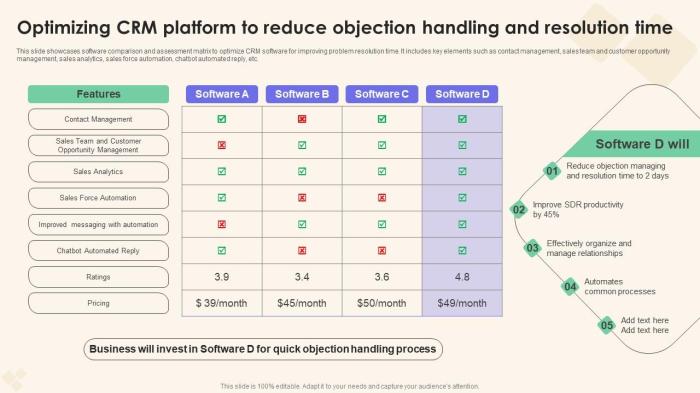
Keeping your CRM humming along smoothly isn’t just about choosing the right host; it’s about actively monitoring and maintaining its performance. Ignoring potential issues can lead to frustrating slowdowns, lost productivity, and even data breaches. A proactive approach to monitoring and maintenance is crucial for a healthy CRM environment.Effective monitoring allows you to identify and address performance problems before they impact your business.
Real-time troubleshooting and preventative strategies minimize downtime and ensure a seamless user experience. This proactive approach also helps you anticipate and mitigate potential hosting issues, keeping your CRM running reliably and efficiently.
Effective Monitoring Tools for Tracking CRM Performance Metrics
Monitoring tools are essential for keeping your CRM in top shape. These tools provide real-time insights into key performance indicators (KPIs), enabling you to catch problems early and prevent major disruptions. Choose tools that provide granular data, allowing you to pinpoint the source of any performance bottleneck. Consider factors like ease of use, scalability, and the ability to integrate with other business tools.
- Performance Monitoring Dashboards: A centralized dashboard provides a holistic view of your CRM’s health. Key metrics like response time, database query performance, and server load are displayed, giving you a quick overview of overall system health. These dashboards should be customizable to highlight the specific metrics most relevant to your business needs.
- Application Performance Monitoring (APM) Tools: APM tools provide deep dives into the inner workings of your CRM application. They can pinpoint slow-performing queries, identify bottlenecks in the application code, and track resource utilization across different parts of the application. This level of detail is crucial for targeted troubleshooting.
- Log Analyzers: Analyzing application logs provides valuable insights into errors, warnings, and other system events. Log analyzers allow you to filter, sort, and search for specific patterns, helping you identify recurring issues and potential problem areas.
Troubleshooting and Resolving Performance Issues in Real-Time
Proactive monitoring enables real-time identification and resolution of performance issues. This requires a clear understanding of your CRM’s typical performance and the ability to quickly identify deviations.
- Establish Baseline Performance: Identify typical response times, query execution durations, and server resource utilization for your CRM. This baseline allows you to quickly spot deviations from normal behavior. A well-defined baseline is critical for proactive issue detection.
- Implement Alerting Systems: Set up automated alerts for critical performance metrics. Configure alerts to trigger when certain thresholds are exceeded. This allows for immediate response to potential problems, preventing them from escalating.
- Isolate the Problem: If a performance issue arises, carefully analyze the data from your monitoring tools to pinpoint the root cause. Is it a database query, a network problem, or an application bug? Identifying the source allows for targeted solutions.
Strategies for Preventing Potential Hosting Issues
Proactive measures can significantly reduce the risk of performance problems. These strategies focus on anticipating and addressing potential issues before they impact your CRM.
- Regular Capacity Planning: Anticipate future growth and scale your hosting resources accordingly. Overprovisioning resources, while sometimes seen as an expense, can prevent performance bottlenecks as your business expands.
- Load Balancing: Distribute traffic across multiple servers to prevent overloading any single server. Load balancing is crucial for handling peak loads and ensuring consistent performance.
- Redundancy: Implement redundant systems to ensure business continuity. Backup systems and failover mechanisms provide protection against server failures and outages.
Importance of Regular Maintenance and Updates
Regular maintenance and updates are essential for a healthy CRM. This proactive approach ensures optimal performance, security, and stability. Leaving these tasks to the last minute can lead to serious consequences.
- Software Updates: Keep your CRM software up to date with the latest security patches and performance enhancements. These updates often address critical vulnerabilities and improve overall system stability.
- Server Maintenance: Schedule regular server maintenance tasks to optimize performance and address potential issues. This proactive approach can prevent problems before they occur.
Implementing a Performance Monitoring System
A well-defined procedure is essential for implementing a performance monitoring system.
- Identify Key Metrics: Determine the performance metrics most crucial to your business needs. Prioritize those that directly impact user experience and business processes.
- Select Monitoring Tools: Choose tools that effectively track the chosen metrics and integrate seamlessly with your CRM and other business systems.
- Establish Alerting Thresholds: Define the specific thresholds that trigger alerts for critical performance issues. This ensures timely response to potential problems.
- Develop a Troubleshooting Protocol: Create a documented process for identifying and resolving performance issues. A clear procedure ensures that issues are addressed effectively and consistently.
- Regularly Review and Update: Periodically review the monitoring system to ensure it remains effective and aligned with your business needs. Adapt to changing conditions and incorporate new metrics as required.
Illustrative Examples of Successful CRM Hosting Implementations
So, you’ve got your CRM humming along nicely, but is your hosting setup actuallyoptimizing* its performance? Let’s look at some real-world examples of companies that nailed their CRM hosting, boosting efficiency and profitability. These aren’t just theoretical scenarios; these are proven strategies that you can adapt to your own business.These successful implementations aren’t just about choosing a fancy hosting provider; they’re about understanding your specific needs and meticulously tailoring the hosting environment to meet them.
From migrating to cloud-based solutions to upgrading infrastructure, these companies demonstrate that careful planning and execution can dramatically improve CRM performance and ultimately, drive business growth.
Successful CRM Hosting Optimization Strategies
Companies that successfully optimized their CRM hosting often implement a combination of strategies. These strategies go beyond just selecting a hosting provider. They focus on meticulous planning and execution, tailored to specific business needs. This holistic approach ensures that the CRM hosting infrastructure perfectly complements the business’s operational requirements.
- Migrating to Cloud-Based Solutions: Many organizations have seen significant improvements in CRM performance by migrating from traditional on-premises hosting to cloud-based solutions. This shift often unlocks scalability, reduced IT overhead, and enhanced accessibility. For example, a retail company migrating to a cloud-based CRM from a legacy on-premises solution experienced a 25% reduction in IT support costs and a 15% increase in sales representative productivity, as cloud-based systems generally offer automatic updates and scalability.
Boosting CRM performance hinges on efficient hosting. Think about it: slow loading times and glitches directly impact user experience, ultimately affecting customer satisfaction. Understanding how server hosting affects CRM customer satisfaction is key ( How Server Hosting Affects CRM Customer Satisfaction ). A robust, reliable hosting solution translates to happier customers, which in turn, fuels better CRM performance.
It’s a virtuous cycle, folks. Fast, reliable hosting is a game-changer for your CRM.
This frees up IT resources to focus on other crucial tasks, while the CRM remains available anytime, anywhere.
- Upgrading Infrastructure: Keeping your hosting infrastructure up-to-date is paramount. Organizations frequently experience increased CRM performance by upgrading their hardware, increasing RAM, or adding more storage capacity. Consider a manufacturing company that experienced bottlenecks in their CRM system due to insufficient storage. Upgrading to a higher-capacity server resolved these bottlenecks, resulting in a 10% improvement in order processing times.
This demonstrates how upgrading infrastructure can directly impact the performance of the CRM system.
- Optimizing Database Performance: A poorly optimized database can severely impact CRM performance. Companies have seen substantial improvements by implementing database indexing, optimizing queries, and utilizing caching mechanisms. For example, a financial services firm improved their CRM’s transaction processing speed by 30% by implementing database indexing. This demonstrates how optimizing database performance is a key factor in maintaining CRM efficiency.
Case Studies of Successful CRM Hosting Optimization
These case studies highlight the tangible benefits of optimizing CRM hosting.
| Organization | Optimization Strategy | Positive Outcomes |
|---|---|---|
| Retail Company A | Migrated to cloud-based CRM solution | 25% reduction in IT support costs, 15% increase in sales representative productivity |
| Manufacturing Company B | Upgraded server hardware | 10% improvement in order processing times |
| Financial Services Firm C | Optimized database queries and caching | 30% improvement in transaction processing speed |
Future Trends in CRM Hosting and Performance
The CRM landscape is constantly evolving, driven by advancements in cloud technology, AI, and the increasing need for scalability and security. Understanding these future trends is crucial for businesses to ensure their CRM systems remain efficient, reliable, and aligned with their evolving needs. Choosing the right hosting solution today will significantly impact long-term performance and avoid costly migrations in the future.Predicting the future of CRM hosting requires an understanding of current trends and emerging technologies.
Adapting to these changes will allow businesses to optimize their CRM investments and leverage the latest advancements for improved performance and enhanced user experiences. Proactive strategies will be key to navigating the evolving landscape and ensuring a seamless transition.
Emerging CRM Hosting Technologies
Current trends in cloud computing, like serverless functions and edge computing, are influencing CRM hosting. Serverless functions allow for more flexible and scalable CRM deployments, enabling businesses to respond quickly to changing demands. Edge computing brings processing power closer to the data source, potentially improving performance and latency, especially for geographically dispersed users. These technologies are already impacting CRM development and will continue to play a significant role in future deployments.
Emerging Challenges and Opportunities
The increased complexity of CRM systems and the growing volume of data they manage create new challenges. Maintaining high performance while managing security and data privacy is paramount. Opportunities lie in leveraging AI and machine learning to automate tasks, improve data analysis, and personalize customer experiences. This includes AI-powered insights and automation tools that streamline customer interactions and enhance decision-making.
Predictions for the Future of CRM Hosting and Performance
Several factors point towards a future where CRM hosting becomes more integrated with other business applications and infrastructure. This integration will drive improved data flow and more seamless experiences. Increased reliance on cloud-native architectures, serverless functions, and containerization is expected to reduce infrastructure costs and improve performance. This trend is already seen in other sectors, and CRM is poised to follow suit.
How to Adapt to Future Changes in CRM Hosting
Staying ahead of the curve requires continuous learning and adaptation. Businesses should monitor emerging technologies and evaluate their potential impact on CRM performance. Investing in skilled personnel capable of understanding and deploying these new technologies is vital. Flexible and scalable hosting solutions are essential to handle future growth and changing requirements.
Illustrative Table of Predicted Future Trends in CRM Hosting
| Trend | Description | Impact |
|---|---|---|
| Increased Adoption of Serverless Functions | CRM applications will increasingly utilize serverless functions for scalability and cost-efficiency. | Reduced infrastructure costs, improved scalability, and faster deployment times. |
| Edge Computing Integration | CRM applications will be deployed closer to the data source to improve performance and reduce latency. | Enhanced performance for geographically dispersed users, faster response times, and improved user experience. |
| Cloud-Native Architectures | CRM hosting will rely more on cloud-native technologies for greater agility and flexibility. | Improved scalability, reduced infrastructure management, and faster deployment times. |
| AI-Powered Automation | AI and machine learning will be more extensively used to automate tasks and improve CRM performance. | Enhanced data analysis, personalized customer experiences, and reduced manual effort. |
Closure
In conclusion, achieving optimal CRM performance hinges on a multifaceted approach encompassing hosting efficiency, security protocols, and proactive monitoring. By implementing the strategies Artikeld in this guide, you can unlock the full potential of your CRM system, improving productivity, enhancing data security, and ultimately driving business growth. Choosing the right hosting provider and configuration, coupled with robust monitoring and maintenance, is key to a high-performing CRM.
The future of CRM performance is inextricably linked to efficient hosting solutions.
Popular Questions
What are the common signs of poor CRM hosting?
Slow loading times, frequent errors, sluggish responses, and inconsistent data access are all potential indicators of poor CRM hosting. Increased downtime or system instability are also red flags.
How can I choose the right hosting provider for my CRM?
Consider factors like server specifications, network bandwidth, customer support, and security protocols when selecting a hosting provider. Look for providers with a proven track record of supporting CRM applications.
What are the most critical security measures for CRM hosting?
Data encryption, robust access controls, regular security audits, and firewalls are essential for safeguarding your CRM data. A multi-layered approach to security is vital.
How often should I perform maintenance on my CRM hosting?
Regular software updates, backups, and performance checks are critical for maintaining optimal CRM hosting. Proactive maintenance is key to preventing downtime and data loss.